View Other: Cement Silos

RU CN

Seed Steel Silo vs. Flat Warehouse: How to Protect Seed Germination Rates

Sep.29, 2026Keywords:seed steel silo, seed storage, seed storage system, seed germination
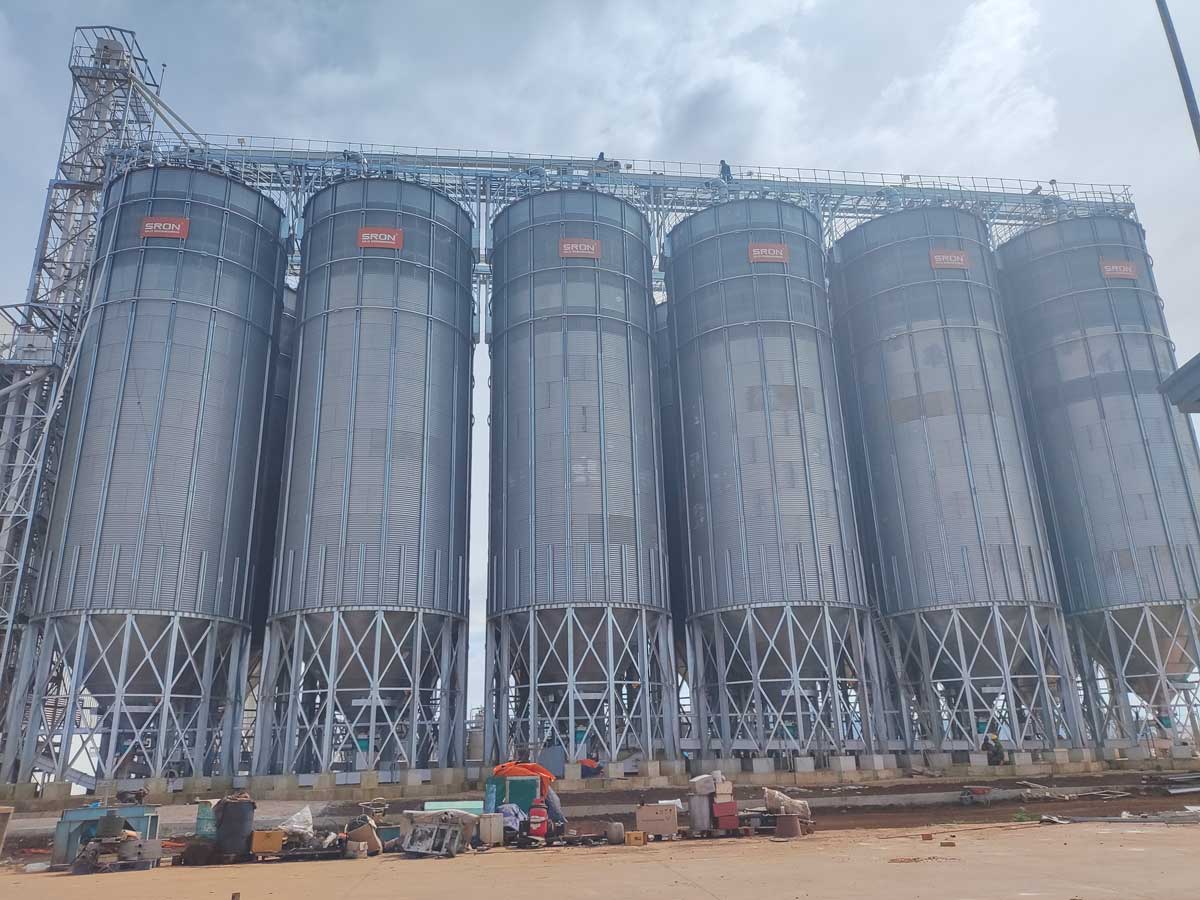
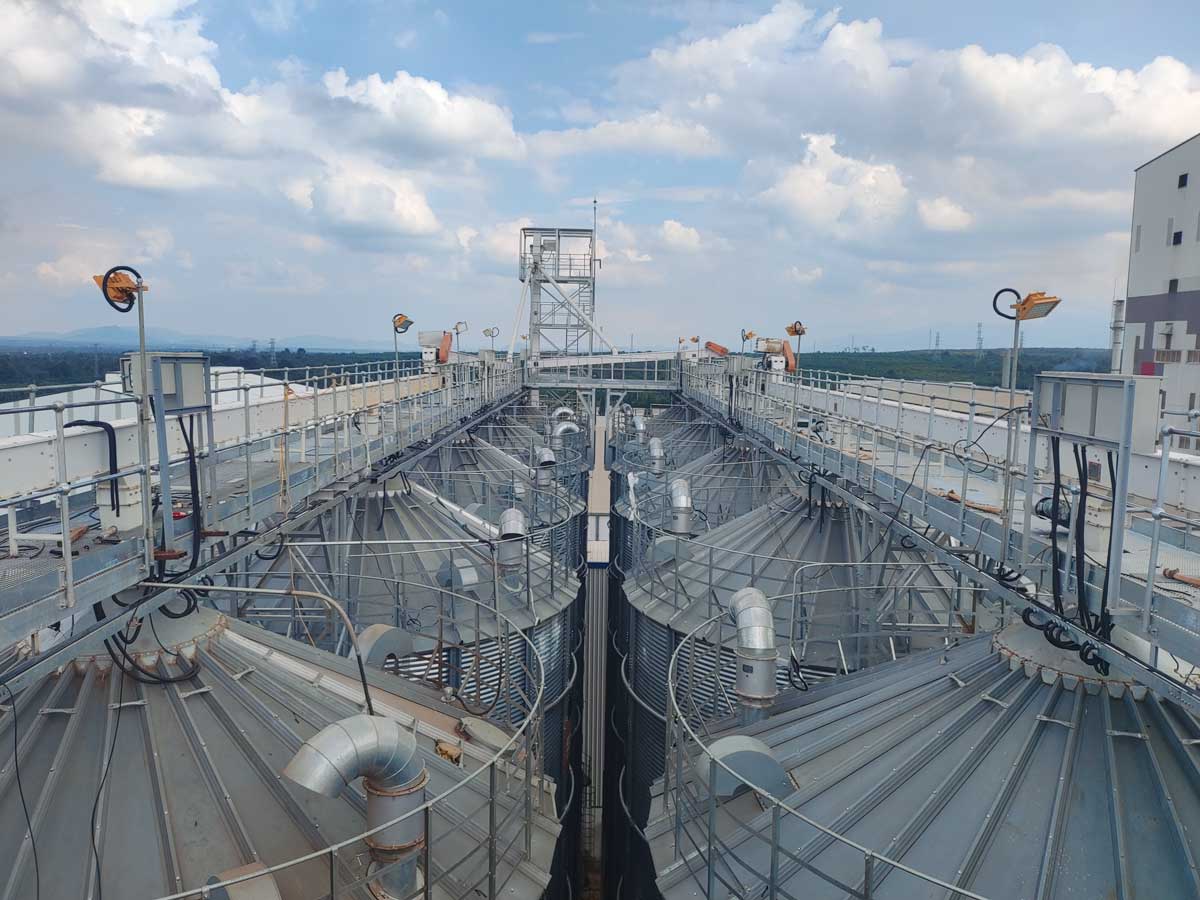
Seeds are the "microchips" of agriculture, and storage serves as the final line of defense protecting them. From the time a seed is harvested in the field until it is sown in the next season, it often spends months—or even years—in a warehouse. During this period, the storage environment quietly determines the seed's fate: whether it retains its vigorous vitality or gradually loses its viability amidst fluctuations in temperature and humidity.
So, which option—flat warehouses or steel silos—is truly better at preserving seed vitality? The answer lies in the details of temperature and humidity control, pest management, and overall operational practices.


The core requirement of seed storage: germination rate is the ultimate benchmark.

Ultimately, two primary factors determine the storage life of seeds: moisture content and storage temperature. The lower the moisture content and the more suitable the temperature, the longer the seeds remain viable. High relative humidity is particularly detrimental to seed germination rates and vigor—its impact can even surpass that of temperature.
This implies that an effective seed storage system must continuously combat two "enemies" throughout the storage period: moisture ingress and temperature fluctuations. It is precisely in this regard that flat-bottomed war.


Traditional Flat Warehouses: Quality Concerns Behind Cost Advantages

Flat warehouses have played a pivotal role in the development of China's seed industry. Resembling residential houses, these structures are primarily built of reinforced concrete; with individual capacities ranging from several hundred to over ten thousand tons, they feature simple designs and low construction costs, remaining the primary storage type for many seed companies to this day.
In terms of physical protection, properly designed flat warehouses can effectively protect against rodents, birds, and fire; furthermore, applying asphalt moisture barriers to the interior walls and floors meets basic moisture-proofing requirements. These warehouses are indeed suitable for seeds that are packaged and stored with a rapid turnover cycle.
However, when storage periods are extended and requirements for germination rates become more stringent, the structural limitations of single-story warehouses become apparent.

First, there is a limited capacity for environmental control.
The spatial configuration of flat warehouses makes the installation of temperature and humidity control systems extremely difficult, and the efficiency of ventilation and controlled-atmosphere treatments lags far behind that of silo-based systems. When localized heating occurs within the stored seed mass, flat warehouses struggle to facilitate a rapid response; manual turning or localized ventilation yields limited results, whereas steel silos allow for quick intervention simply by activating the ventilation system or transferring the seeds using conveying equipment. This disparity in response speed is often a decisive factor during the critical window for maintaining seed viability.

Second, the level of mechanization and automation is low.
Loading and unloading operations in flat warehouses rely heavily on forklifts or manual labor, resulting in low efficiency and high labor intensity. In contrast, automated steel silo systems operate according to strictly preset protocols, allowing for precise and controlled handling of different seed varieties and minimizing the risk of human error at the source.


Seed Steel Silos: A Storage Philosophy Designed for Life

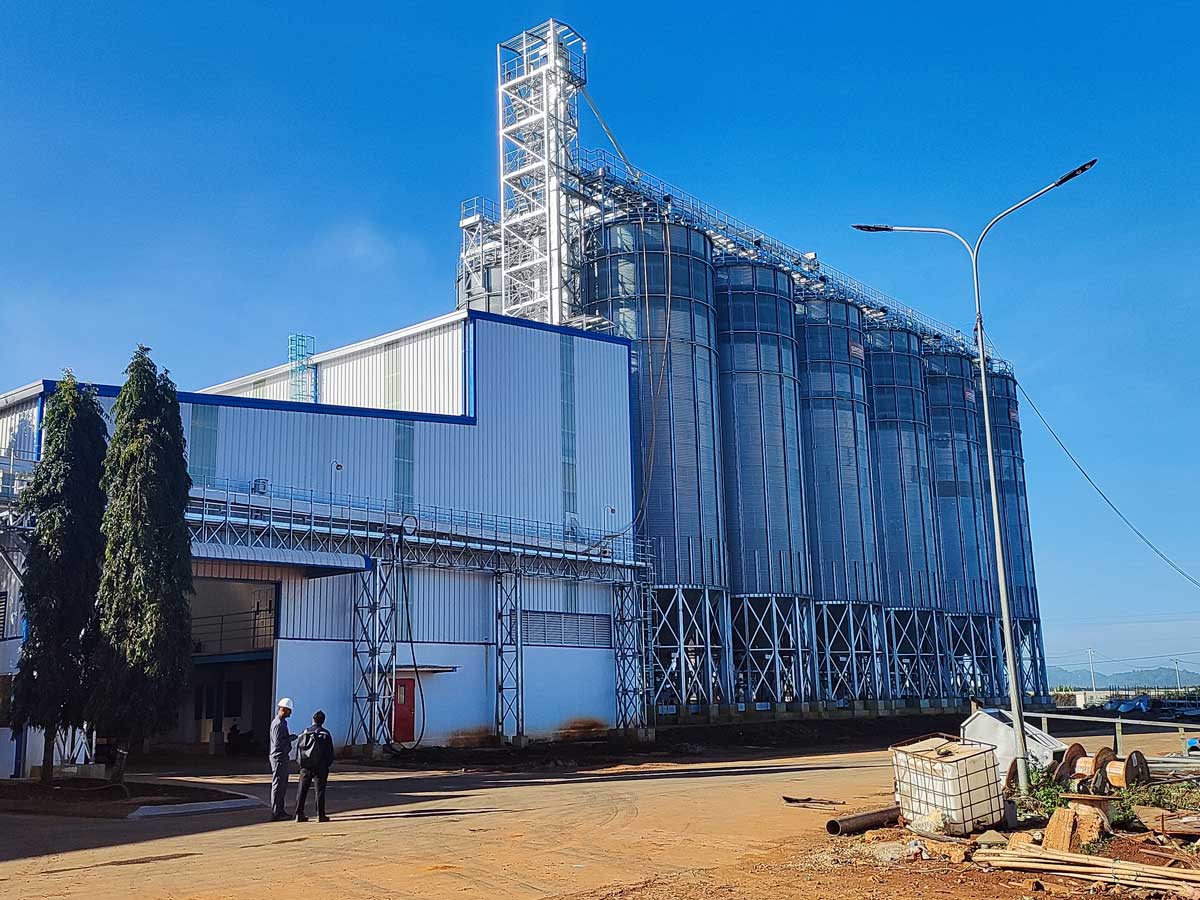
A seed steel silo is far more than a simple metal storage container. Its design is rooted in the use of engineering solutions to create a controlled micro-environment for the seeds.

Airtightness serves as the first line of defense.
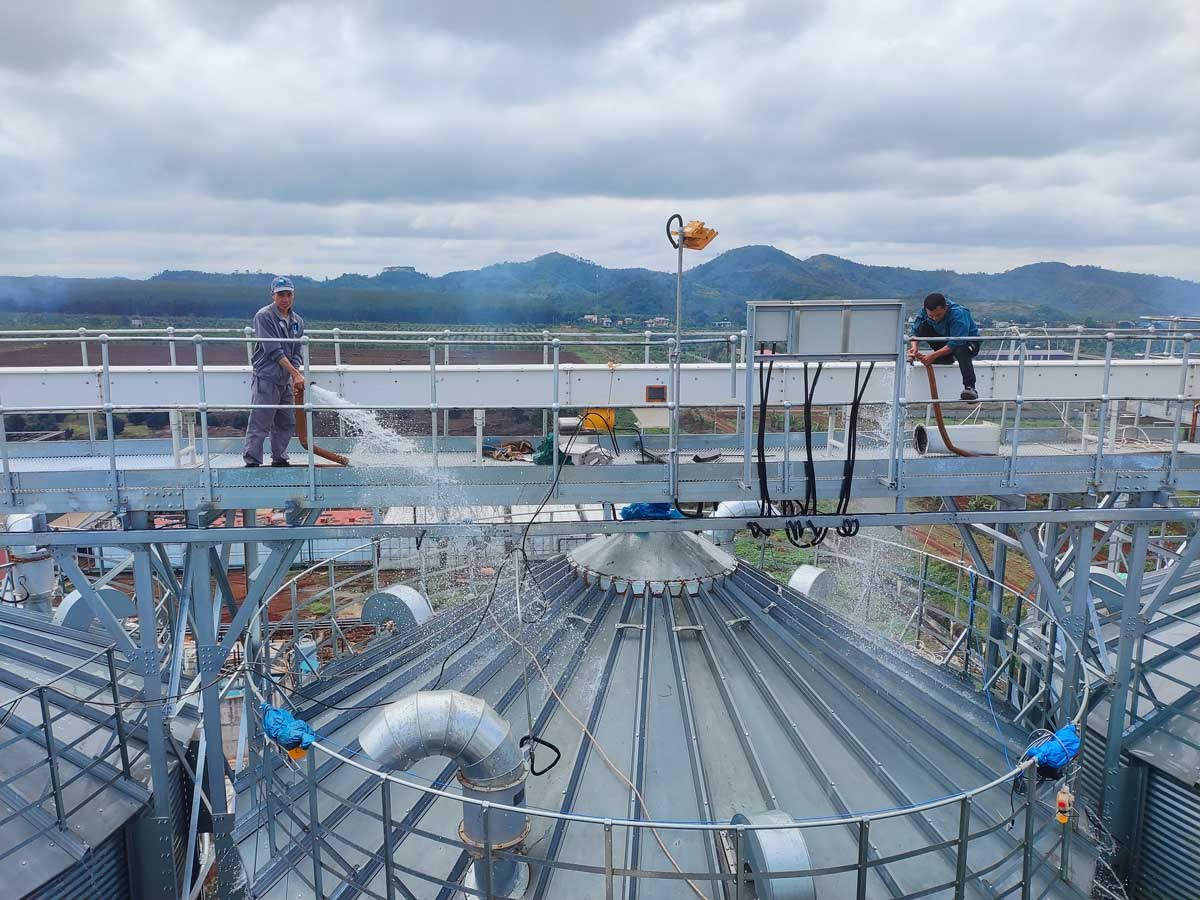
The walls of modern corrugated bolted steel silos are constructed from galvanized corrugated sheets joined by bolted overlaps; specialized sealant is applied at the joints and secured with sealing bolts to form a continuous, airtight seal. After being upgraded to meet the airtightness requirements for fumigation, the silo creates an isolated internal atmosphere. This allows phosphine fumigation to maintain effective concentrations, transforming pest control from a "best-effort" endeavor into a process that is both controllable and verifiable. However, achieving airtightness involves more than just the design blueprints; every step of on-site installation—including sealing, component fastening, and airtightness testing—must strictly adhere to fumigation-grade standards.

Temperature and humidity regulation shifts from passive to active.
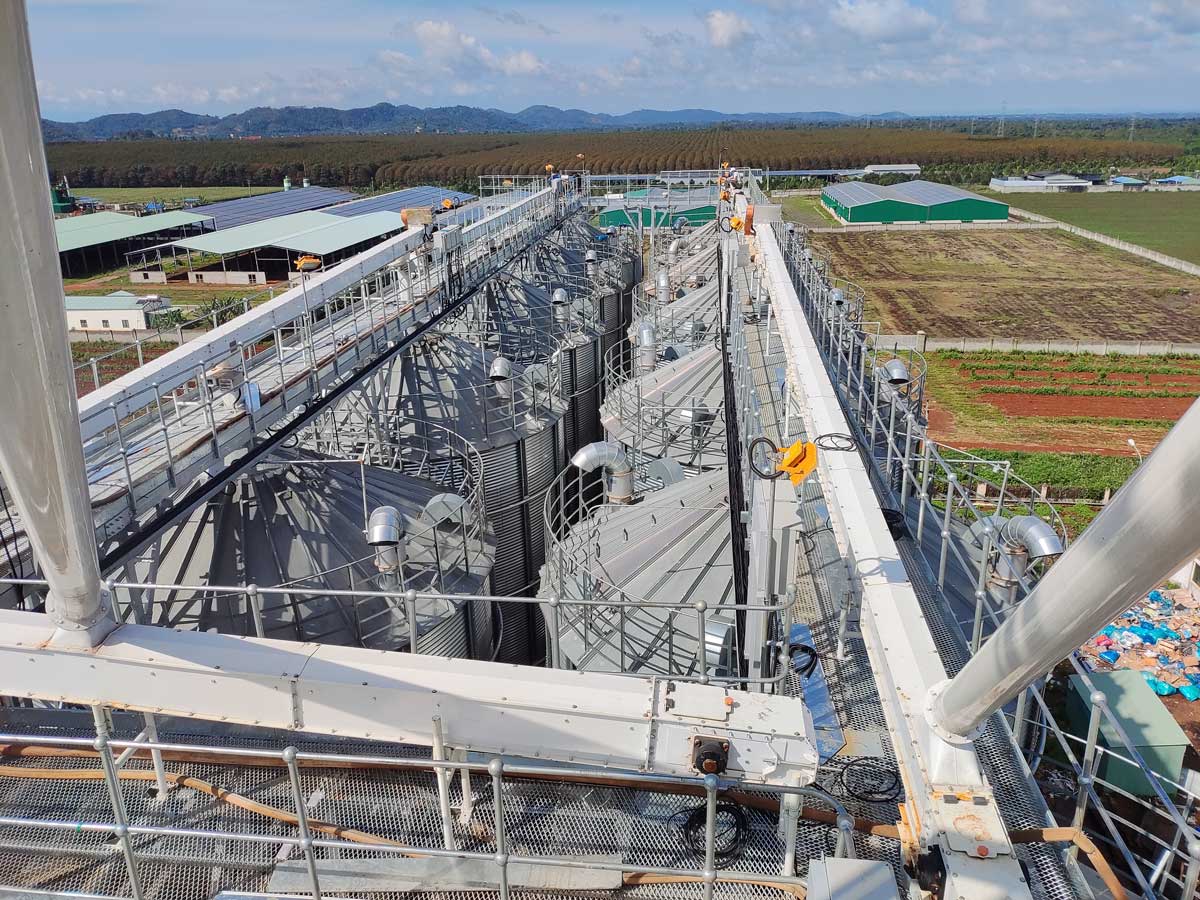
Steel silos are typically equipped with comprehensive ventilation systems featuring base-level ventilation units and multiple roof vents. Fans supply air at scheduled intervals, while internal temperature sensors and material-level alarms enable automated control (via a grain condition monitoring system). When sensors detect a localized rise in temperature, the system can immediately initiate ventilation or a grain-transfer process, nipping potential issues in the bud. This "sense-and-respond" closed-loop capability is difficult to replicate in traditional flat warehouses.

A leap in footprint and spatial efficiency.
To store the same 5,000 tons of material, the land area required for a flat warehouse could instead accommodate three steel silos with a combined capacity of 15,000 tons. In regions where land is scarce, this disparity directly impacts an enterprise's room for expansion and its investment efficiency.

Seed damage during loading and unloading is controllable.
It is sometimes argued that the drop height within steel silos damages seeds. However, modern steel silos utilize anti-drop mechanisms combined with low-speed conveying equipment to significantly reduce breakage rates. The key lies in the soundness of the system design, rather than any inherent flaw in the silo type itself. In practical applications, pre-storage cleaning and moisture reduction are equally critical: when seed moisture is properly controlled and paired with low-breakage conveying designs, the loss in germination rate attributable to the storage process can be kept to a minimum.


The Key Decision: Storage Objectives Determine Warehouse Type

The relationship between these two types of warehouses is not simply a matter of one replacing the other; rather, they serve as different tools suited to distinct storage objectives.
For enterprises with a seed turnover cycle of three to six months—and where seeds are stored in packaged form with limited variety and batch counts—the low initial investment required for flat-floor warehouses remains a rational choice. The inherent versatility of these structures—which can be repurposed as agricultural machinery depots or processing workshops during the off-season—offers additional flexibility.
However, the advantages of steel silos become rapidly apparent in the following scenarios: when dealing with a wide range of varieties and batches that demand strict prevention of mixing and precise management; when operations scale up to a point where labor costs and quality risks can no longer be overlooked, highlighting the value of integrated storage and handling solutions such as steel silo systems for farms; and when export or certification requirements make an automated, fully traceable system a mandatory prerequisite.


Comparison: Flat Warehouses vs. Steel Seed Silos
Indicator Flat Warehouse Steel Seed Silo
Germination Rate Assurance Relies on manual experience; high variability Systematic control; high stability
Pest Control Fumigation possible but labor-intensive Airtight fumigation; verifiable results
Quality Consistency Significant batch-to-batch variation Standardized processes; high consistency
Environmental Control Spatial constraints; difficult to retrofit Ventilation, temperature monitoring, and interlocking systems; real-time response
Loading/ Unloading Speed Relies on mobile equipment; limited throughput; high dust emissions from mobile gear (poor for the environment) External-column hopper-bottom silos; high throughput; minimal residual grain; fully automated control
Investment & Expansion Low unit construction cost; expansion requires more land High storage capacity per unit area; modular expansion possible

Frequently Asked Questions (FAQ)

Q1: What types of seeds are suitable for storage in steel silos?
A: They are suitable for field crop seeds such as corn, wheat, rice, and soybeans, as well as small- and medium-sized batches of vegetable, oilseed, and other seeds. Since different seed types have varying requirements for safe moisture levels and temperature control, storage parameters must be configured according to the specific seed type before loading.

Q2: Does storing seeds in steel silos affect germination rates?
A: The primary factors affecting germination rates are excessive seed moisture and uncontrolled internal temperatures. Properly configured steel silo systems—featuring ventilation, temperature monitoring, and airtight fumigation capabilities—are specifically designed to address these issues, provided that the moisture content meets standards upon loading and the system is configured according to the specific characteristics of the seeds.


Shifting from "Human-Dependent" to "System-Dependent"

The true value of a steel silo lies not in the structure itself, but in the comprehensive environmental control and quality management system it supports. For seed companies that regard seed quality as their lifeline, choosing steel silos essentially means shifting the assurance of seed germination rates from a reliance on human oversight to a reliance on a system (Grain Safe Storage Technology). This is not merely an equipment upgrade; it represents a necessary transition for seed storage operations from an era driven by experience to one driven by data.
If you are planning a seed storage project, we invite you to discuss silo selection and system configuration with SRON.

Please feel free to give your inquiry in the form below. We will reply you in 24 hours.

  • * Name :

  • Country :

  • * Email :

  • Mobile :

  • Message :

    ( Please try to share us more information of silo project so our engineer can better help you .)

  • By submitting this form, you agree that HENAN SRON SILO ENGINEERING Co., Ltd. / SRON may use your information to respond to your inquiry. Please read our Privacy Policy for details.