In modern coffee factories, coffee bean silos are not merely storage tanks, but a crucial component of the entire coffee bean processing and storage system, working in synergy with equipment for receiving, cleaning, roasting, blending, and packaging.
II. Why is proper coffee bean storage so important?
Coffee beans are a natural and temperature-sensitive agricultural product. Poor storage conditions can quickly lead to:
Loss of aroma and flavor;
Moisture absorption leading to mold;
Insect infestation and contamination.
These factors directly reduce the commercial value of coffee beans, ultimately resulting in shorter shelf life and increased return rates.
Through an optimized coffee bean silo storage system, stable environmental conditions can be provided for coffee beans throughout the entire process from origin to roasting:
Stable temperature and humidity;
Controlled oxygen exposure;
Clean, food-grade contact surfaces;
Facilitating batch tracking and inventory management.
This provides a foundation for quality stability and profitability for any coffee producer and roaster who values quality.
III. Main Types of Coffee Bean Silos
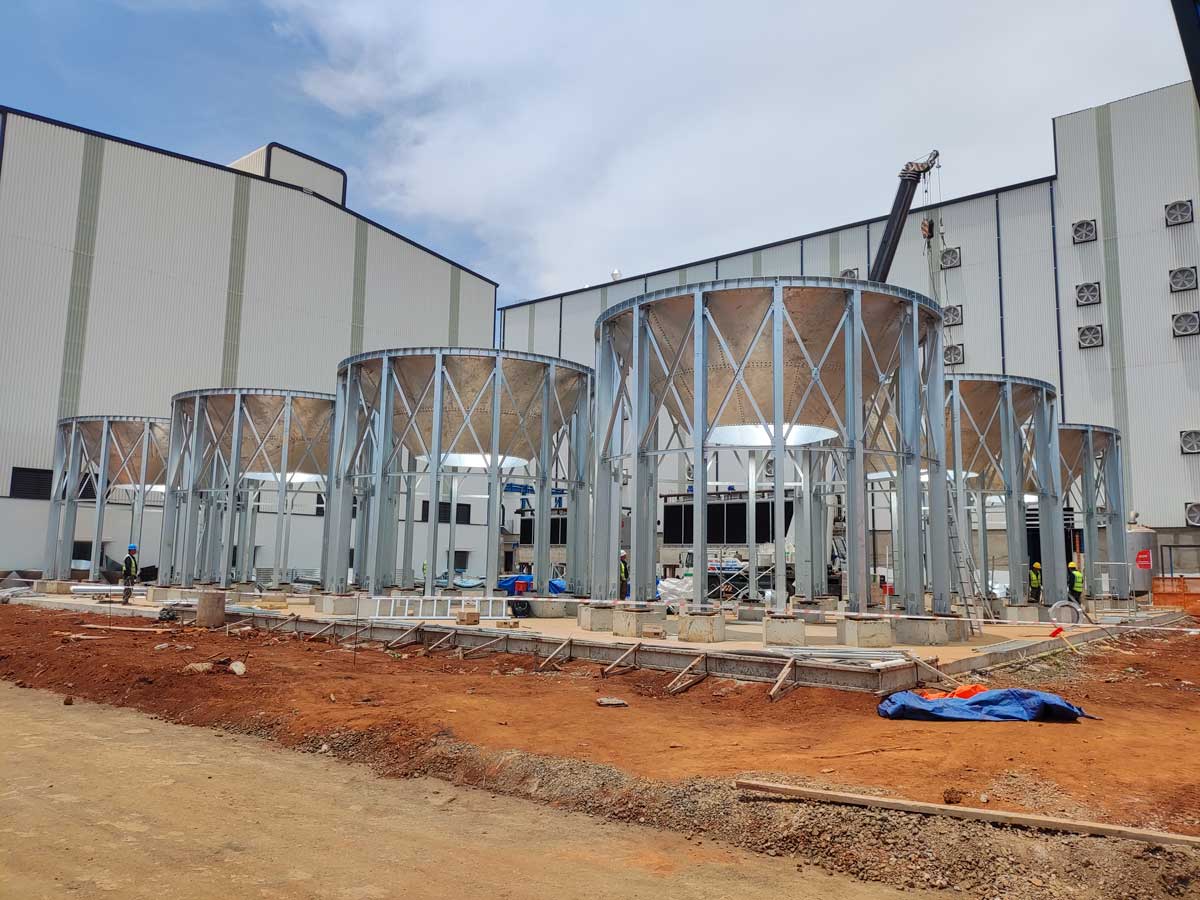
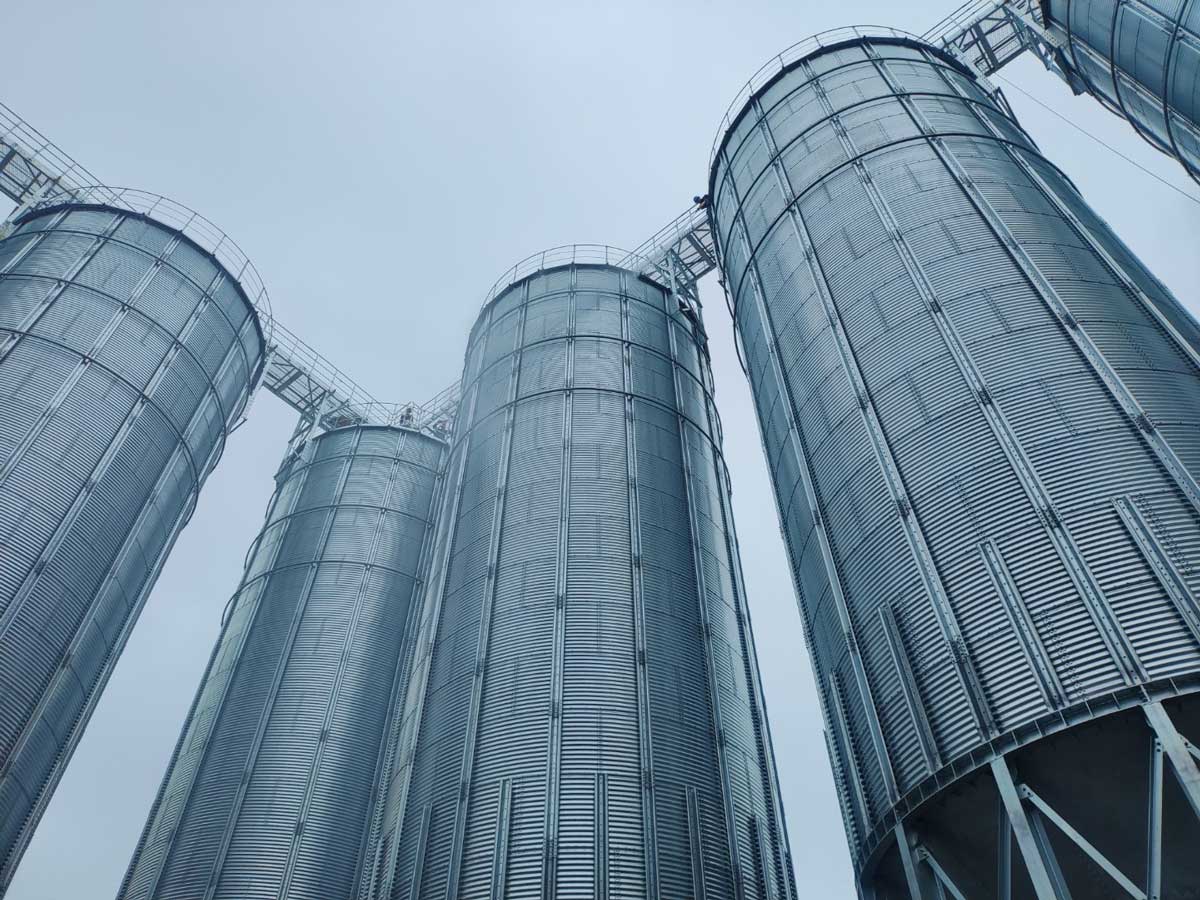
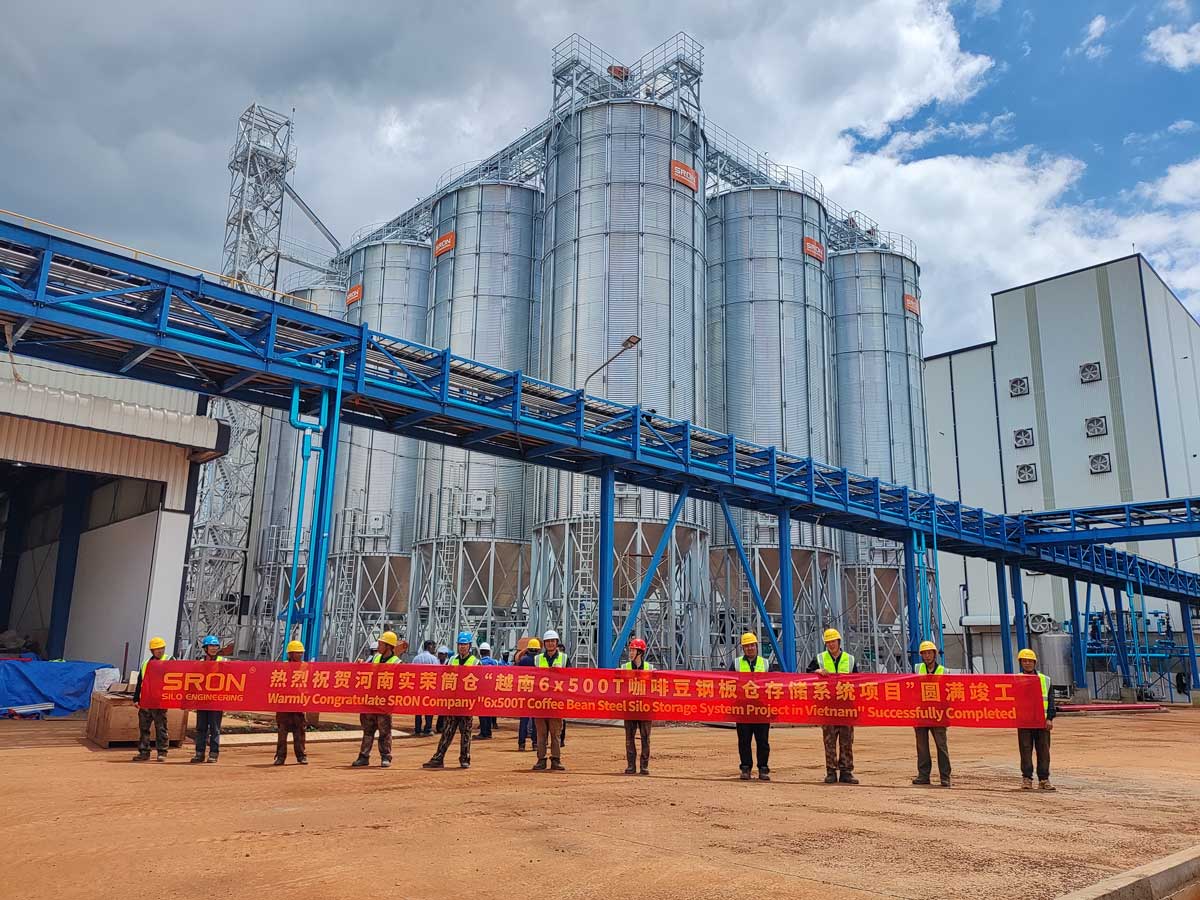
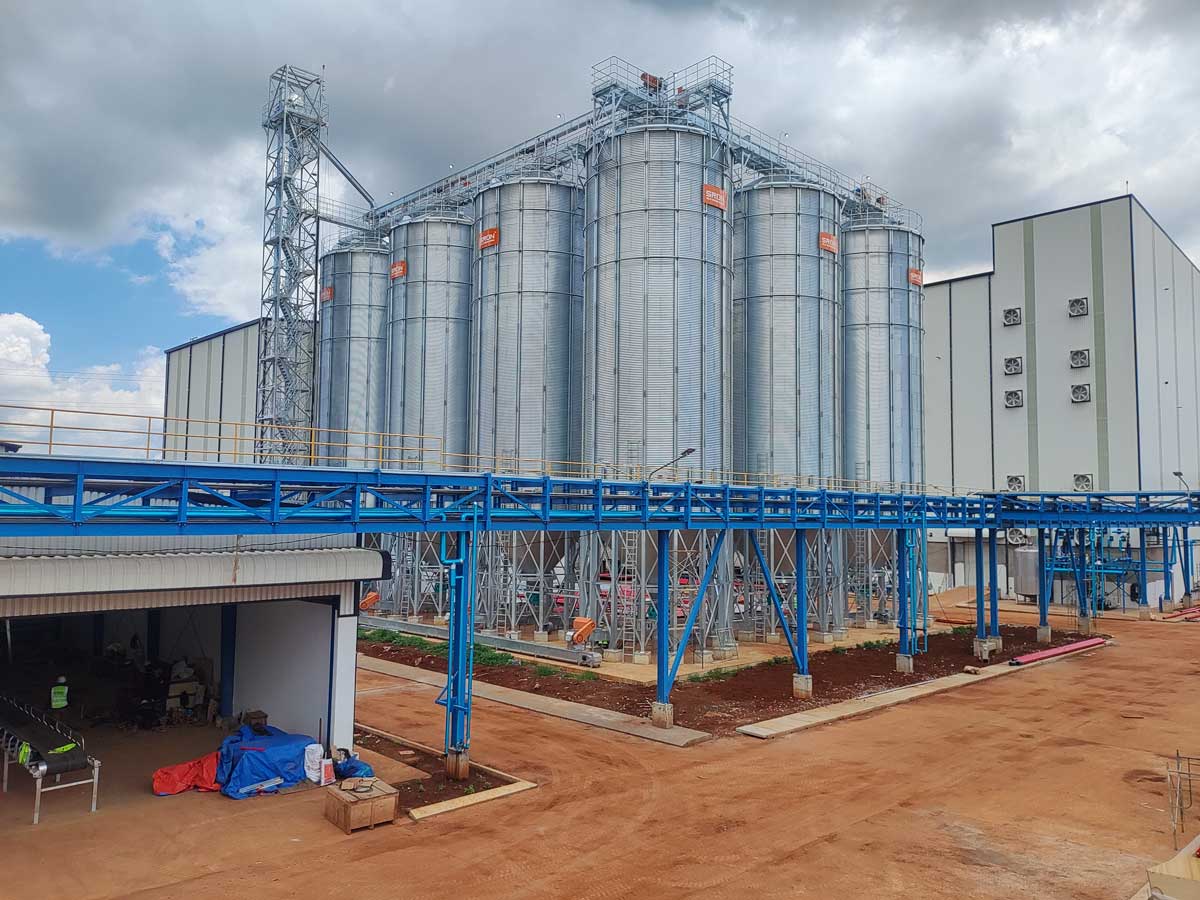
Different factories have different needs for coffee bean storage. We typically use corrugated steel silos with cone-shaped bolted silo as coffee storage.
Coffee Bean Steel Silos
Coffee bean steel silos are widely used for storing both green and roasted beans due to the following advantages:
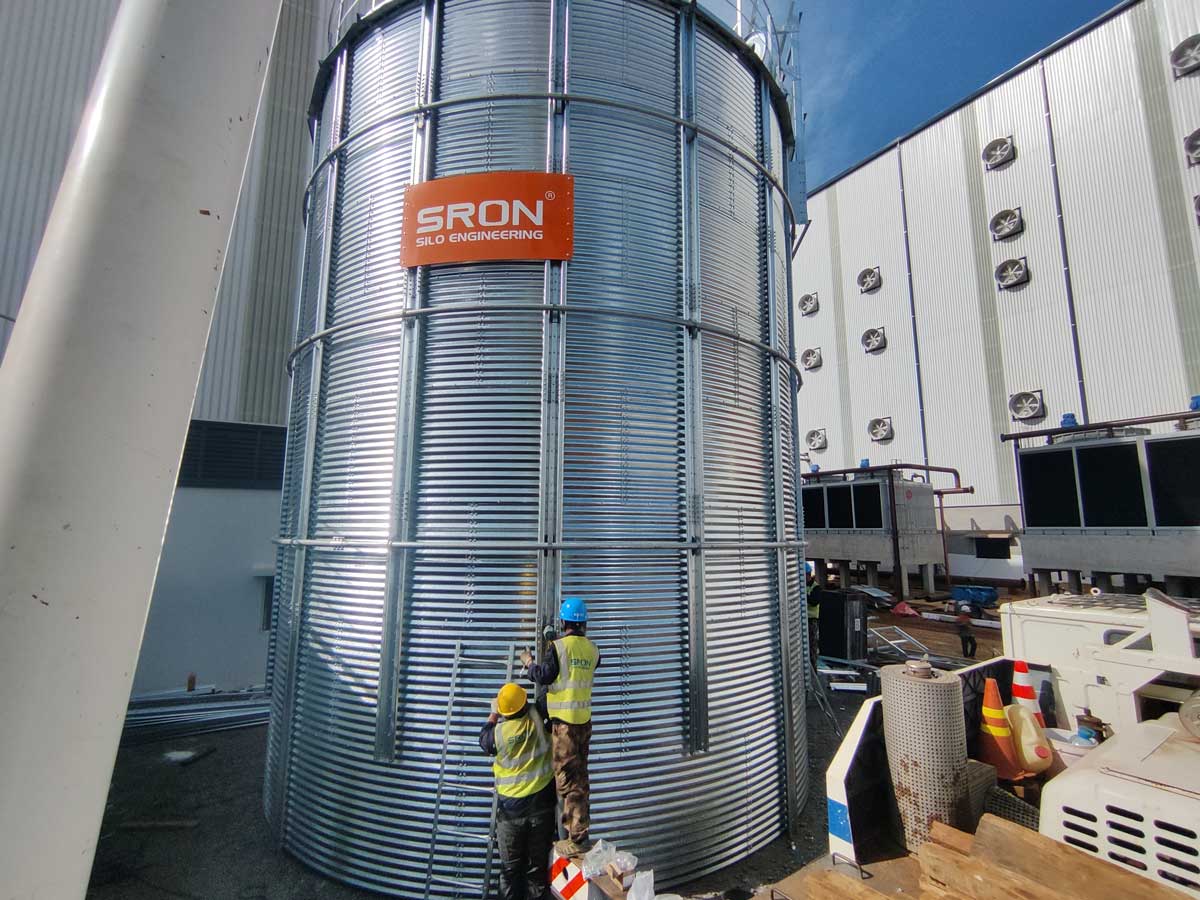
* Corrugated bolted silo: Lightweight, high structural strength, and long service life;
* External column design: Smooth and hygienic inner wall, preventing material accumulation;
* Minimum 275g/㎡ zinc coating thickness: Provides durable protection for the steel silo, reducing maintenance and replacement frequency due to corrosion, thus lowering the total life cycle cost;
* Flexible design and modular production: Short installation cycle;
* Easy to integrate with weighing, ventilation, and automation systems.
IV. Key Design Considerations for Coffee Bean Silo Systems
An efficient coffee bean silo system must be specifically designed according to the needs of the plant. Key design parameters include:
1. Storage Capacity, Processing Capacity, and Process Flow
Required effective storage capacity (tons);
Daily processing volume and batch size;
Number of silos and requirements for different origins/variety;
Layout relationship with raw material receiving, roasting, blending, and packaging lines;
A reasonable process layout can reduce the number of conveying equipment, lower the coffee bean breakage rate during transportation, reduce equipment failure rate, and ensure smooth operation of the entire system.
2. Environmental Control: Temperature, Humidity, and Airflow
An in-warehouse grain condition monitoring system, equipped with temperature and humidity sensors, extracts temperature and humidity data at different locations within the warehouse;
An integrated under-warehouse ventilation system and an in-warehouse aeration system, combined with the grain condition monitoring system, ensure timely ventilation in case of abnormal temperature changes, guaranteeing coffee beans are stored at the appropriate temperature;
Natural and mechanical ventilation openings on the warehouse roof effectively remove heat accumulated on the roof, reducing localized grain temperature rises;
Stable environmental conditions are the best guarantee for ensuring the aroma, freshness, and shelf life of both green and roasted beans in the silos.
3. Integration with Roasting and Packaging Lines
Reducing elevator belt speed and scraper chain speed to minimize coffee bean breakage;
Online weighing and quantitative feeding linked to roasting and packaging machines;
Buffer silos to improve production flexibility;
Automated control system supporting blending and batch tracking;
A coffee bean storage system highly integrated with the production line can improve product consistency, reduce manual operation, and enhance traceability management.
V. Steel Coffee Bean Silos: Why Are They Preferred?
Steel silos combine high mechanical strength, durability, and excellent hygiene, making them ideal for coffee bean storage: * Corrosion-resistant design with double-sided galvanized steel plates; silo design lifespan typically 20-30 years;
* Reinforced external columns; no dead corners inside, preventing material accumulation and reducing mold risk;
* Customizable capacity available for everything from small roasters to large coffee terminals; * Modular bolt-assembly structure; short installation time;
* Easy integration with leveling, weighing, and intelligent monitoring systems;
* With appropriate insulation, moisture-proofing, and climate control measures, steel coffee bean silos maintain a stable internal environment even in regions with complex climates.
VI. Best Practices for Bulk Coffee Bean Storage
Achieving optimal bulk coffee bean storage in silos requires both suitable equipment and standardized daily operations.
1. Pre-Loading Preparation
Thoroughly clean and inspect the silo interior;
Confirm that gate valves, dust collectors, and level gauges are functioning correctly;
Ensure no residue from previous batches to avoid cross-contamination;
Check that the ventilation/aeration and monitoring systems are operating normally;
2. Storage Management
Maintain temperature and humidity within specified ranges;
Regularly check for signs of condensation, mold, or pests;
Implement standardized fumigation and pest management procedures when necessary;
Turn inventory around using a first-in, first-out (FIFO) principle to ensure freshness;
Use automated sensors and data logging systems to monitor silo environmental changes in real time, identifying and resolving potential problems early.
3. Unloading and Batch Switching
Design the unloading cone angle appropriately to avoid dead zones in the material flow;
Ensure the uniformity and continuity of material flow to subsequent equipment;
Load coffee beans from different origins or blends only after clearing the warehouse;
Keep records of each batch for quality control and traceability.
VII. SRON Coffee Bean Silo Integrated Solutions
SRON Silo Engineering specializes in the engineering design, manufacturing, and installation of steel silos and bulk storage systems for grain, food, and industrial materials. Leveraging our extensive experience in grain and food-grade steel silos, we provide customized coffee bean silo solutions for coffee roasters, traders, and coffee factories worldwide.
Our services typically include:
Feasibility studies and conceptual design of coffee bean storage solutions;
Silo type configuration (green bean silos, buffer silos, etc.);
Structural design, food-grade material selection, and environmental control solutions;
Integrated design with receiving, cleaning, roasting, blending, and packaging systems;
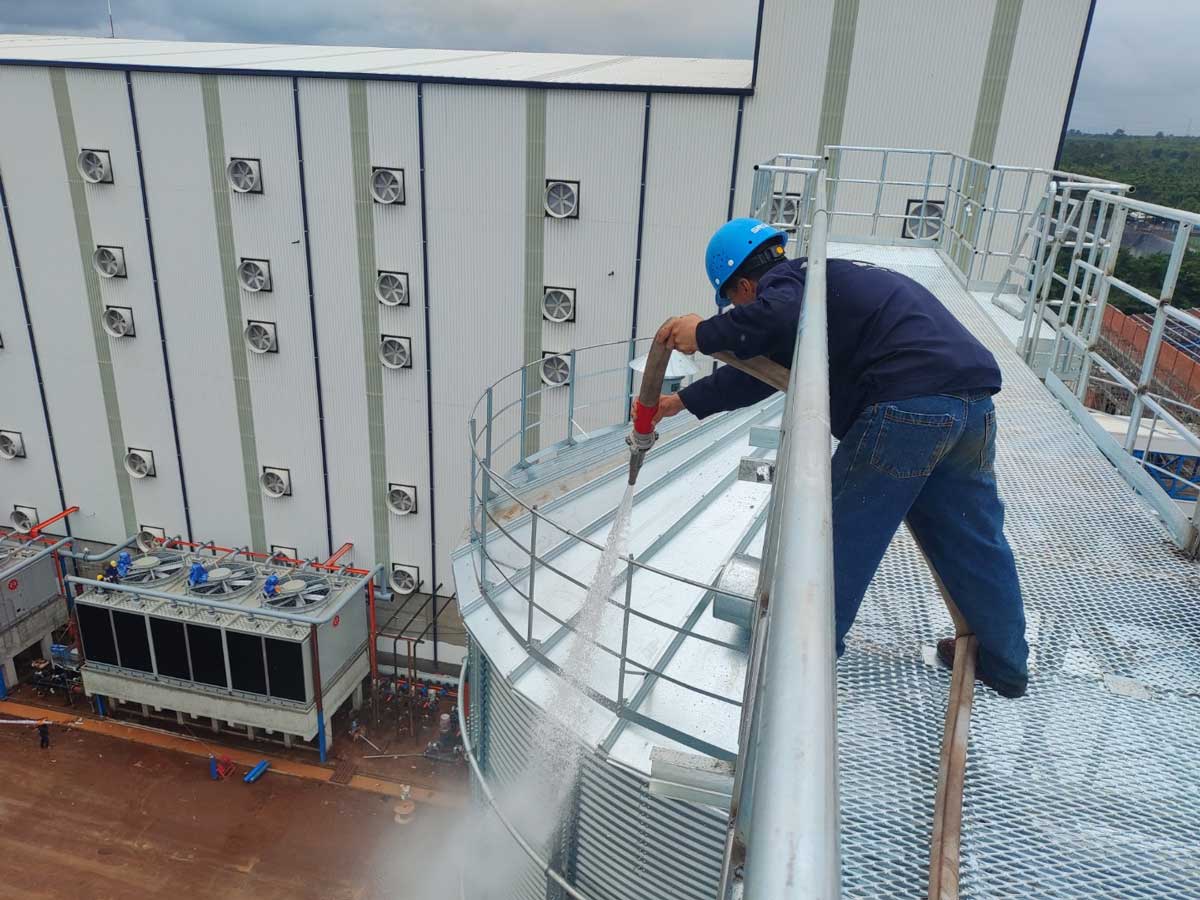
Silo manufacturing, on-site installation guidance, commissioning, and training;
Technical support and system optimization and upgrade services during operation;
Choosing SRON means more than just a coffee bean silo; it means a complete coffee bean handling and storage engineering system tailored to your business needs.
VIII. Future Trends in Coffee Bean Silo Technology
With the growing global demand for high-quality coffee, coffee bean silo technology is evolving in the following directions:
* Smart silos integrated with the Internet of Things (IoT) for real-time monitoring of temperature, humidity, and CO₂;
* Climate control systems that automatically adjust airflow and insulation based on external environmental conditions;
* Data-driven quality management and predictive maintenance;
* More environmentally friendly materials and energy-efficient ventilation systems;
* Modular, clustered silo solutions that can be scaled up to production capacity;
SRON continues to monitor these technological trends and applies mature and reliable new technologies to coffee bean silo projects to help customers enhance their competitiveness and future adaptability.
.jpg)

.jpg)
.jpg)
.jpg)