Summer is a critical season for grain storage management. As ambient temperatures rise, grain piles are prone to issues such as internal temperature increases, moisture migration, localized condensation, and heightened pest activity. If a granary lacks adequate thermal insulation, relying solely on traditional ventilation methods often proves insufficient to maintain optimal grain temperatures over the long term.
In modern grain storage systems, combining thermally insulated granaries, grain cooling systems, and low-temperature storage technologies creates a more stable and efficient solution for summer storage. The synergistic effect of “structural insulation, mechanical cooling, and scientific monitoring” not only mitigates the impact of external heat on the grain pile but also reduces risks to grain quality during storage.
Why is grain storage more prone to safety issues during the summer?
High summer temperatures cause heat to continuously transfer into the grain storage facility. If the walls, roof, and doors of the storage structure lack adequate thermal insulation, the internal temperature rises in tandem with the external temperature. Grain naturally undergoes respiration; as the grain temperature rises, the rate of respiration may intensify, generating both moisture and heat. If heat within the grain mass is not dissipated promptly, localized “hot spots” can form, leading to a deterioration in grain quality. Furthermore, summer is a peak period for the activity of stored-grain pests. Elevated temperatures not only accelerate the reproduction of certain pests but also increase the risk of mold growth. Consequently, a key aspect of grain safety management during the summer is controlling grain temperature and maintaining a stable environment within the grain mass.
While traditional natural ventilation can improve grain temperatures under certain conditions, its effectiveness is highly dependent on external weather. When outdoor temperatures are high, introducing hot air directly can actually cause the grain temperature to rise further. Therefore, for grain requiring safe, long-term storage, relying solely on natural ventilation is no longer sufficient to meet the temperature control requirements of modern grain storage facilities.
Insulated Grain Silos: Minimizing External Heat Ingress
Compared to traditional steel grain silos, the primary function of an insulated grain silo is not to actively lower the grain temperature, but to slow the rate at which external heat is transferred into the silo. Modern insulated silos typically enhance the thermal insulation performance of the entire structure by focusing on components such as walls, roofs, doors, and access hatches, utilizing appropriate insulation materials and structural designs.
Solar radiation causes a significant rise in roof temperature, particularly during summer days. If the roof’s insulation performance is poor, substantial heat will penetrate the silo interior. Therefore, insulation is crucial for managing the internal thermal load.
The advantages of insulated grain silos are primarily reflected in the following areas:
1. Reducing thermal load from solar radiation
Effective insulation structures mitigate the impact of high external temperatures on the internal environment, resulting in more gradual fluctuations in silo temperature.
2. Minimizing grain temperature fluctuations
Grain storage does not simply require the lowest possible temperature; rather, it demands a relatively stable storage environment. Insulation structures dampen the impact of diurnal temperature variations on the grain mass.
3. Reducing the operational load on grain cooling systems
If a silo has poor thermal insulation, external heat will continue to enter even after a cooling system has lowered the grain temperature, leading to rapid loss of the cooling effect. Insulated silos minimize this loss, allowing for more efficient use of the chilled air generated by cooling equipment and thereby improving overall energy efficiency.
Grain Cooling Systems: Key Equipment for Active Grain Temperature Control
If insulated grain silos serve to “block out heat,” then grain cooling systems are responsible for “actively lowering grain temperature.” These systems typically use refrigeration equipment to generate cold air, which is then channeled through an airflow system into the grain mass, gradually reducing the temperature and maintaining it within an optimal range.
Compared to natural ventilation, the primary advantage of grain cooling systems lies in their ability to regulate temperature more actively and precisely. This is particularly important during summer; when ambient temperatures are high, natural ventilation may fail to achieve the desired cooling effect, whereas grain cooling systems can implement tailored cooling strategies based on real-time temperature monitoring data.
The main functions of grain cooling systems include:
Controlling grain temperature: Cooling the grain mass with low-temperature air to lower the overall grain temperature.
Inhibiting pest activity: Low-temperature environments suppress the hatching of insect eggs within the grain, thereby fundamentally reducing the incidence of pest infestations.
Reducing grain respiration intensity: A suitable low-temperature storage environment slows down grain respiration, thereby minimizing the consumption of the grain’s own organic matter and reducing quality degradation during storage.
Improving storage stability: Mechanical cooling reduces the risk of localized “hot spots” within the grain mass, ensuring a more uniform temperature distribution.
Why is the combination of an insulated grain silo and a grain cooling system more effective?
Relying solely on a grain cooling system requires continuous energy consumption to counteract external heat ingress. Conversely, using an insulated silo alone merely slows the rate of temperature rise but cannot actively resolve existing high grain temperatures. Combining the two creates a more efficient “active cooling plus passive insulation” approach.
In simple terms:
The grain cooling system lowers the grain temperature, while the insulation system minimizes the loss of cool air and the entry of external heat; together, they maintain a low-temperature storage environment. For instance, during hot summer weather, the cooling system can first bring the grain temperature down to the target range, after which the insulation system minimizes heat transfer between the silo’s interior and exterior. If the monitoring system detects the grain temperature rising to a preset threshold, the cooling system is reactivated to provide supplemental cooling. This operational strategy is more energy-efficient than continuous cooling and helps reduce unnecessary energy consumption.
The Core of Low-Temperature Grain Storage: Not Simply “The Colder, the Better”
Low-temperature grain storage does not entail lowering the grain temperature indefinitely; rather, it involves formulating a rational temperature control strategy based on factors such as grain variety, moisture content, storage duration, and local climatic conditions. In practical applications, target grain temperatures should be established according to the specific grain type and storage conditions, with continuous monitoring maintained via a grain condition monitoring system.
It is particularly important to note that temperature variations may exist across different locations within the grain mass. Temperatures in the surface layer, the central zone, and areas near the silo walls change at different rates. If an abnormal temperature rise occurs in a specific area, it allows for the timely assessment of potential issues—such as increased grain respiration, moisture migration, or localized heating. Upon detecting such anomalies, appropriate measures—such as ventilation, grain cooling, or other interventions—should be implemented based on an analysis of the grain’s condition.
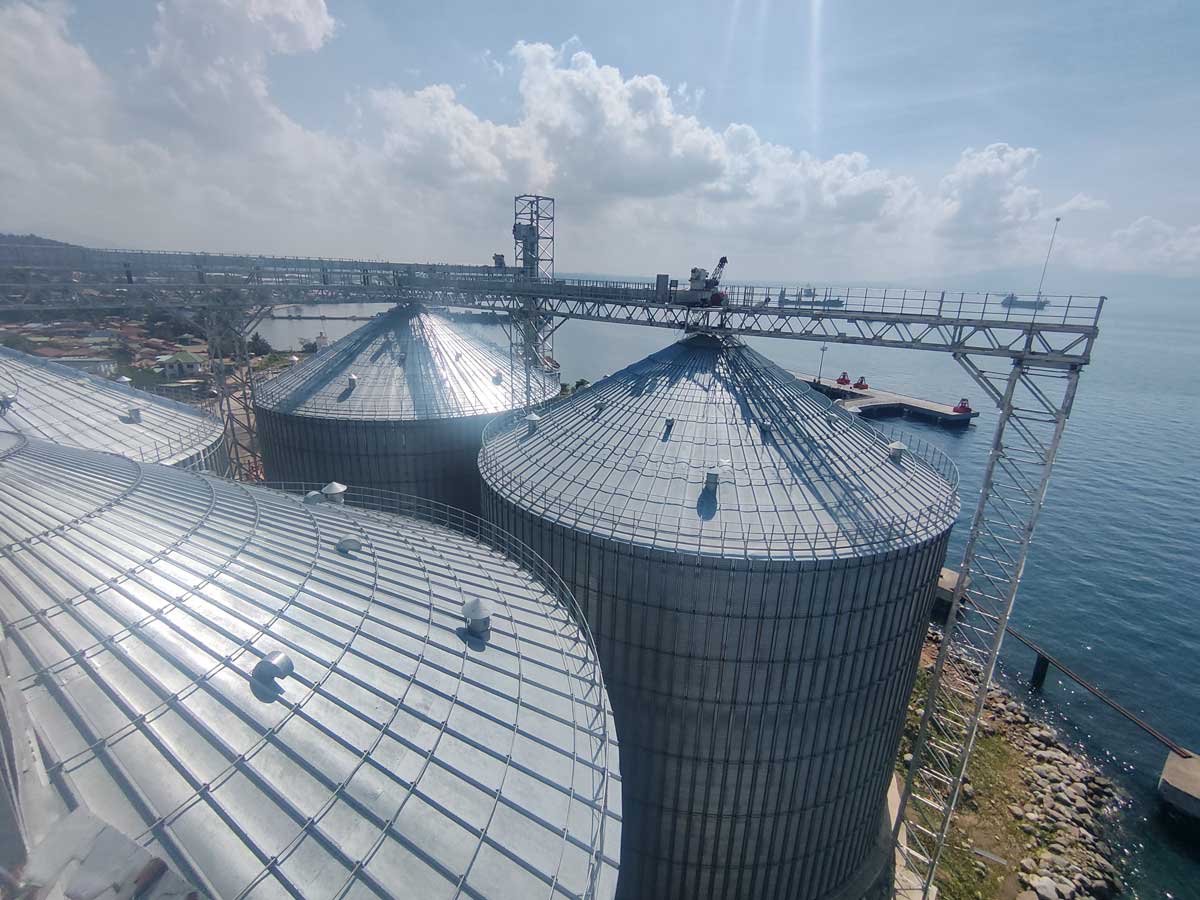
How should grain cooling systems be operated effectively during summer storage?
To enhance the operational efficiency of grain cooling systems, a phased control strategy can be adopted in practice.
Phase 1: Preparing the silo before grain intake
Before grain is loaded into the silo, the thermal insulation structure, sealing integrity, and ventilation ducts should be inspected to ensure the silo is in good condition. Simultaneously, the silo should be cleaned and disinfected as necessary to minimize the risk of pest infestations and mold growth.
Phase 2: Cooling the grain effectively
A grain cooling plan should be formulated based on grain temperature, moisture content, and weather conditions; the equipment should not be started blindly or excessively frequently. By delivering low-temperature air appropriately, the cold air is allowed to pass gradually through the grain mass, achieving relatively uniform cooling.
Phase 3: Maintaining a low-temperature environment
Once the grain temperature reaches the target range, the cooling equipment is turned off, and both the bottom and top ventilation vents are sealed to keep the silo airtight and minimize heat exchange. The grain condition monitoring system is then used to trigger intermittent supplemental cooling whenever the general grain temperature rises to a preset threshold.
Phase 4: Real-time monitoring of grain conditions
Monitoring tools for temperature and moisture are used to track changes in the grain mass in real time. If localized temperature anomalies are detected, the cause must be analyzed quickly and appropriate measures taken. This represents a key distinction between modern low-temperature grain storage and traditional methods: a shift from “periodic inspection” to “real-time monitoring combined with proactive control.”
What other factors must be considered when developing a modern summer grain storage system?
While insulated silos and grain cooling systems are key components, achieving safe and efficient summer grain storage requires the establishment of a comprehensive storage management system. First, the moisture content of grain entering the silo must be properly controlled; excessive moisture increases storage risks, even when low-temperature environments are employed. Second, the airtightness of the silo must be ensured; significant air leakage compromises the retention of cooling effects and increases the operational load on the grain cooling system. Third, the grain pile ventilation system requires proper design, as air supply ducts, vents, and airflow distribution all influence the uniformity of cooling. Finally, a robust grain condition monitoring system should be implemented to continuously record temperature changes, providing the necessary data to guide the operation of the grain cooling system.
.jpg)
Ensuring safe grain storage during the summer requires more than just lowering grain temperatures; it is equally critical to minimize temperature fluctuations, reduce external heat ingress, and promptly detect any abnormal changes within the grain mass. Consequently, combining thermally insulated silos with grain cooling systems represents an effective technical approach to achieving modern, low-temperature grain storage. Insulated structures minimize the loss of cooling energy, grain cooling systems actively regulate grain temperatures, and intelligent monitoring enhances the precision of the entire storage process. As grain storage evolves toward greater energy efficiency and intelligence, this integrated model—combining insulated silos, grain cooling systems, and grain condition monitoring—is emerging as a key solution for safe summer storage, providing a more stable and reliable environment for long-term grain preservation.
.jpg)
.jpg)

.jpg)
.jpg)
.jpg)