Why choose intelligent monitoring?
The essence of the intelligent monitoring system is to transform the invisible internal state of the grain pile into a real-time, visible, and traceable data stream.
1. Three-dimensional point layout: from "blind man touching an elephant" to "holographic perspective"
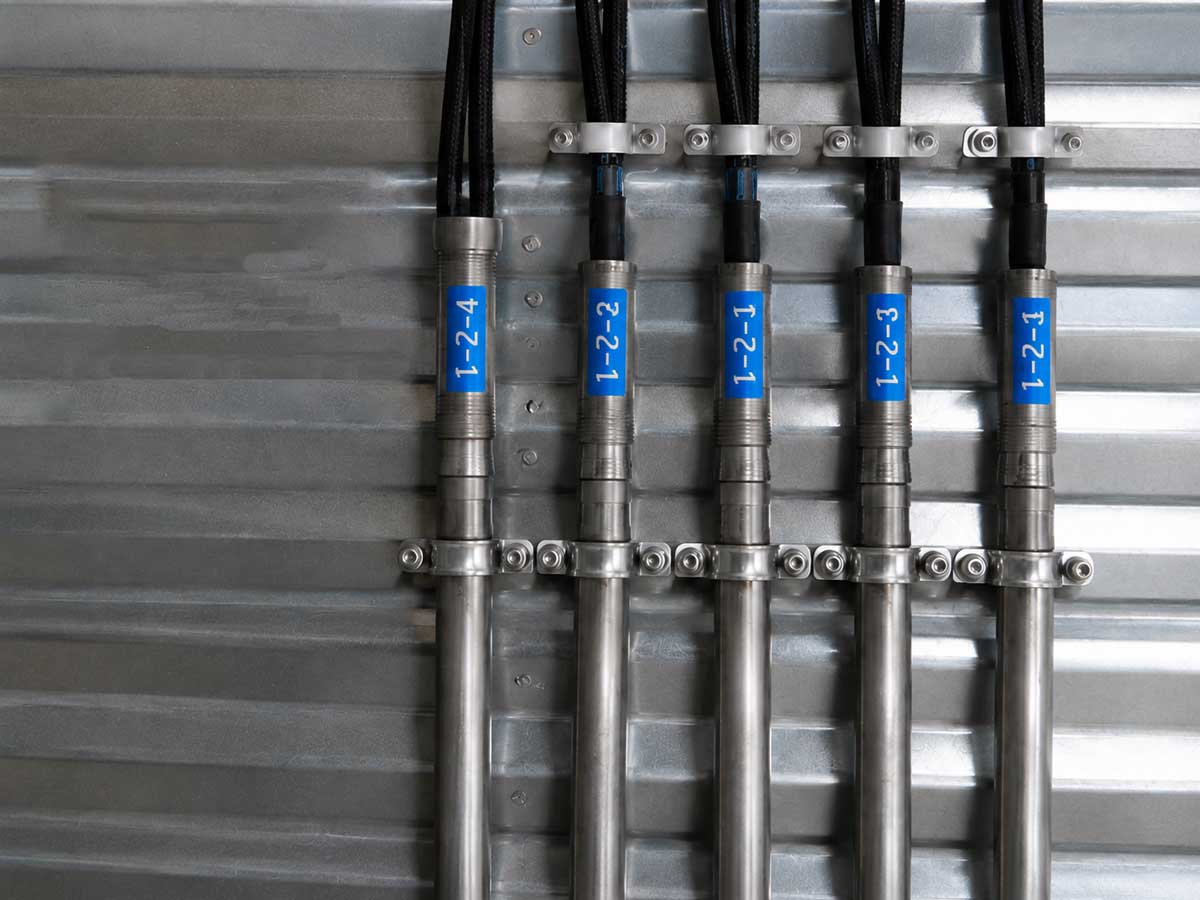
In the intelligent steel warehouse, the temperature measurement cables are arranged symmetrically at standard intervals to form a grid covering the entire warehouse. In the vertical direction, set up a temperature measurement point every 1.5 to 3 meters; in the horizontal direction, the distance between adjacent cables should not exceed 5 meters. The number of temperature and humidity sensors in a 10,000-ton steel warehouse can reach hundreds.
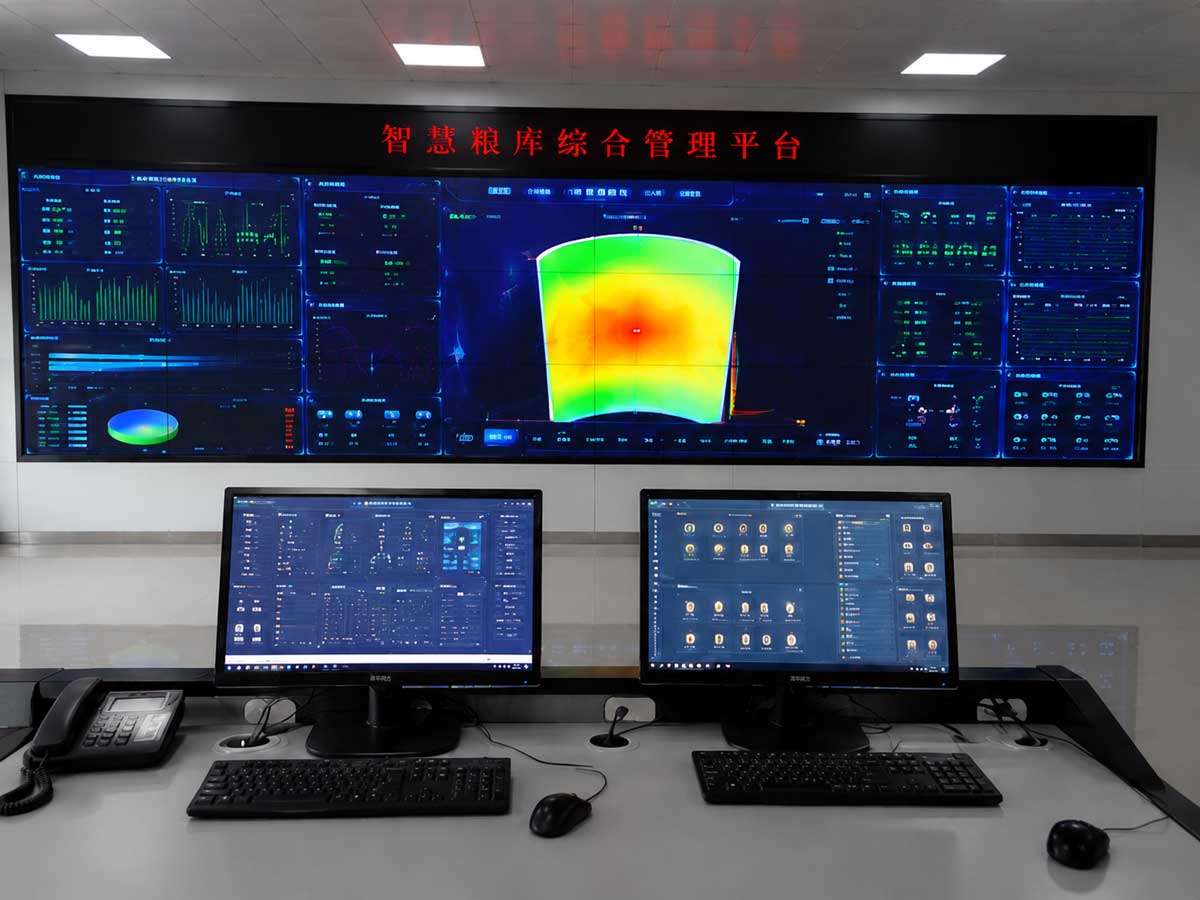
This means that the system can draw a three-dimensional temperature and humidity distribution map inside the grain pile in real time. What managers see on the central control screen is not a few isolated data, but a "heat map" with color gradients - it is clear at a glance where the temperature is normal, where it is abnormally elevated, and where there is a moisture migration trend.
2. Multi-parameter fusion monitoring: not just looking at temperature and humidity
Simple temperature and humidity data are not enough to comprehensively judge grain conditions. The advanced intelligent monitoring system also integrates a variety of sensors:
Carbon dioxide concentration detection: Microbial activities and pest respiration in the grain pile will release CO₂, and its concentration changes will reflect abnormalities earlier than temperature and humidity.
Oxygen concentration monitoring: In the controlled atmosphere grain storage scenario, oxygen content directly affects the activity of pests and mold.
Pressure sensor: monitors the pressure distribution inside the grain pile to assist in determining whether there is a risk of arching or hardening.
Cross-validation of these multi-dimensional data greatly improves the accuracy of abnormal warnings and effectively reduces false positives and false negatives.
3. Remote visual management: warehouse situation is under control
All monitoring data are uploaded in real time through the Internet of Things platform, and managers can view the real-time status of any position through a computer or mobile phone. The system supports historical data query, trend analysis and report export, providing complete data support for grain storage management.
When any parameter exceeds the set threshold, the system will automatically push an alarm message (SMS, WeChat or email) to ensure that the problem is discovered as soon as possible.
Advantages of Automatic Control
While intelligent monitoring addresses the issue of "visibility" (seeing the status), automatic control addresses the issue of "effective management." Only by combining the two can a complete closed-loop system be formed.
1. Closed-loop Temperature and Humidity Regulation
When the monitoring system detects a localized rise in grain temperature or humidity levels exceeding limits, the automatic control system activates the appropriate equipment without human intervention:
It activates roof fans for natural ventilation, starts centrifugal fans for mechanical ventilation, and engages cooling systems to lower temperatures and adjust airflow paths within the silo. The entire process achieves an automated "monitoring–analysis–execution–feedback" closed loop, reducing response times from hours to minutes.
2. Predictive Control: Staying Ahead of Risks
Advanced automatic control systems possess predictive capabilities. By integrating weather forecasts for the next 24 to 48 hours, the system anticipates environmental trends within the silo and implements regulatory measures in advance.
For instance, if the system predicts sustained high temperatures, it proactively initiates pre-cooling before the heatwave arrives; if it forecasts high humidity, it closes ventilation vents beforehand. This "preventive" control strategy eliminates risks before they materialize.
3. Intelligent Early Warning and Tiered Response
Not all anomalies require immediate action. Advanced control systems employ a tiered warning mechanism:
"Attention" Level: Parameters deviate slightly; the system merely logs the data and flags it in daily reports.
"Warning" Level: Parameters show persistent deviation; the system issues notifications and suggests addressing the issue at an appropriate time.
"Alarm" Level: Parameters reach critical thresholds; the system immediately initiates automatic countermeasures and notifies management personnel.
This tiered strategy avoids "false alarm fatigue" (crying wolf) while ensuring the fastest possible response to genuine emergencies.
4. Data-Driven Continuous Optimization
The system records the trigger conditions, executed actions, and outcomes of every automatic control event. By analyzing historical data, it continuously optimizes the ideal control ranges for parameters and refines execution strategies. This means the intelligent system becomes "smarter" with use, and grain storage management undergoes continuous improvement and evolution.
A Triple Dividend: Safety, Efficiency, and Cost-Effectiveness
The introduction of intelligent monitoring and automatic control systems has brought about fundamental improvements to steel grain silos across three dimensions: Enhanced Safety: A triple-layered mechanism—combining real-time monitoring, automatic intervention, and predictive early warning—minimizes risks such as mold and pest infestations. This significantly reduces grain quality loss and extends the storage period.
Labor Optimization: Operational staff requirements can be reduced from dozens to just a few, while workload intensity drops sharply—shifting from physically traversing the silos and manually inserting probes to monitoring screens and tracking data curves.
Energy Efficiency: Automatic control systems operate equipment only when necessary, using optimal durations and intensity levels; compared to manual operation based on experience, this effectively reduces energy consumption for processes such as ventilation and cooling.
Storage infrastructure is the foundation of food security. Within modern grain storage systems, intelligent monitoring and automatic control systems for steel grain silos have evolved beyond mere "auxiliary tools" into core technologies essential for ensuring safe grain storage. These systems not only enhance storage safety and reduce grain loss but also enable enterprises to achieve intelligent management, energy conservation, and unmanned operations. Looking ahead, as the development of smart grain depots progresses, intelligent steel grain silos are set to become a key direction for the modern grain storage industry.
.jpg)
.jpg)

.jpg)
.jpg)
.jpg)