Coffee bean steel silos perfectly meet these needs.
Structure and Working Principle of Coffee Bean Steel Silos
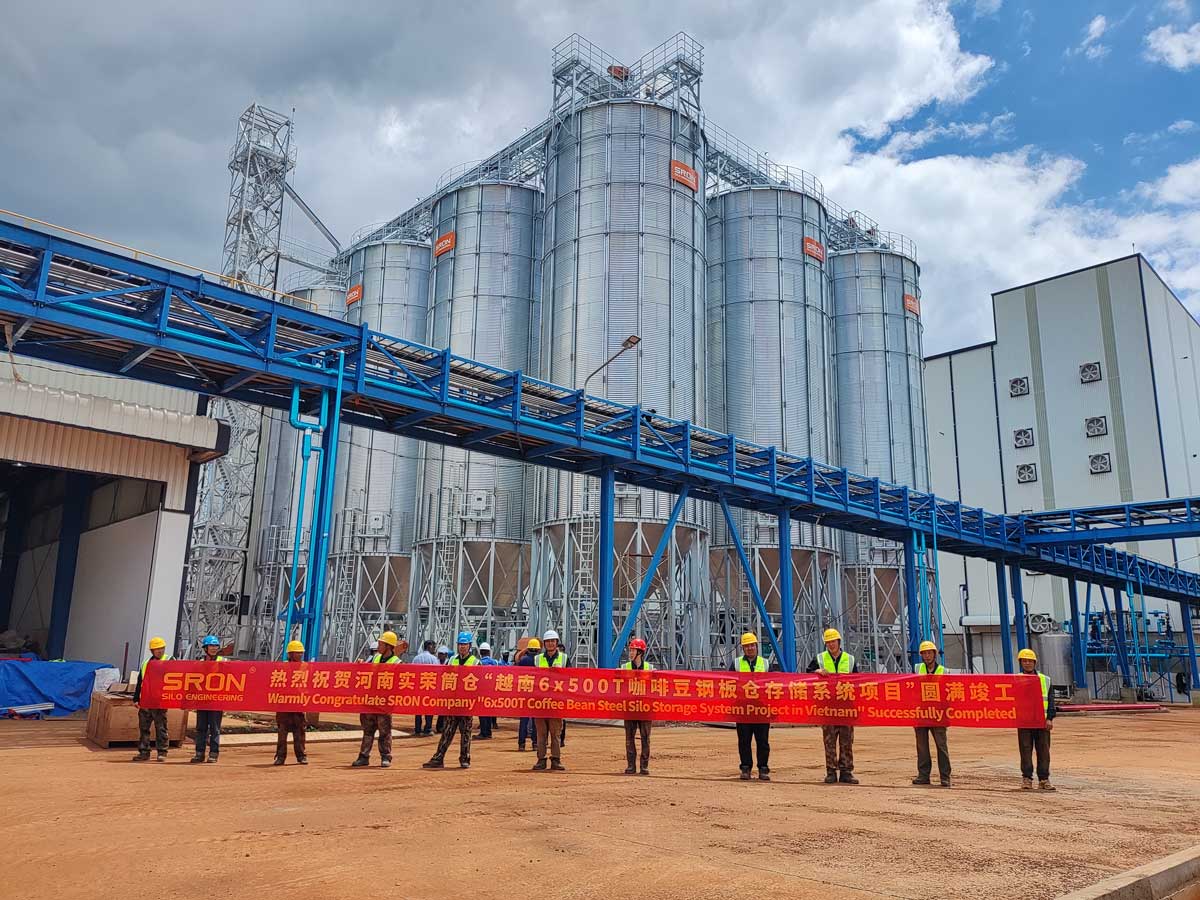
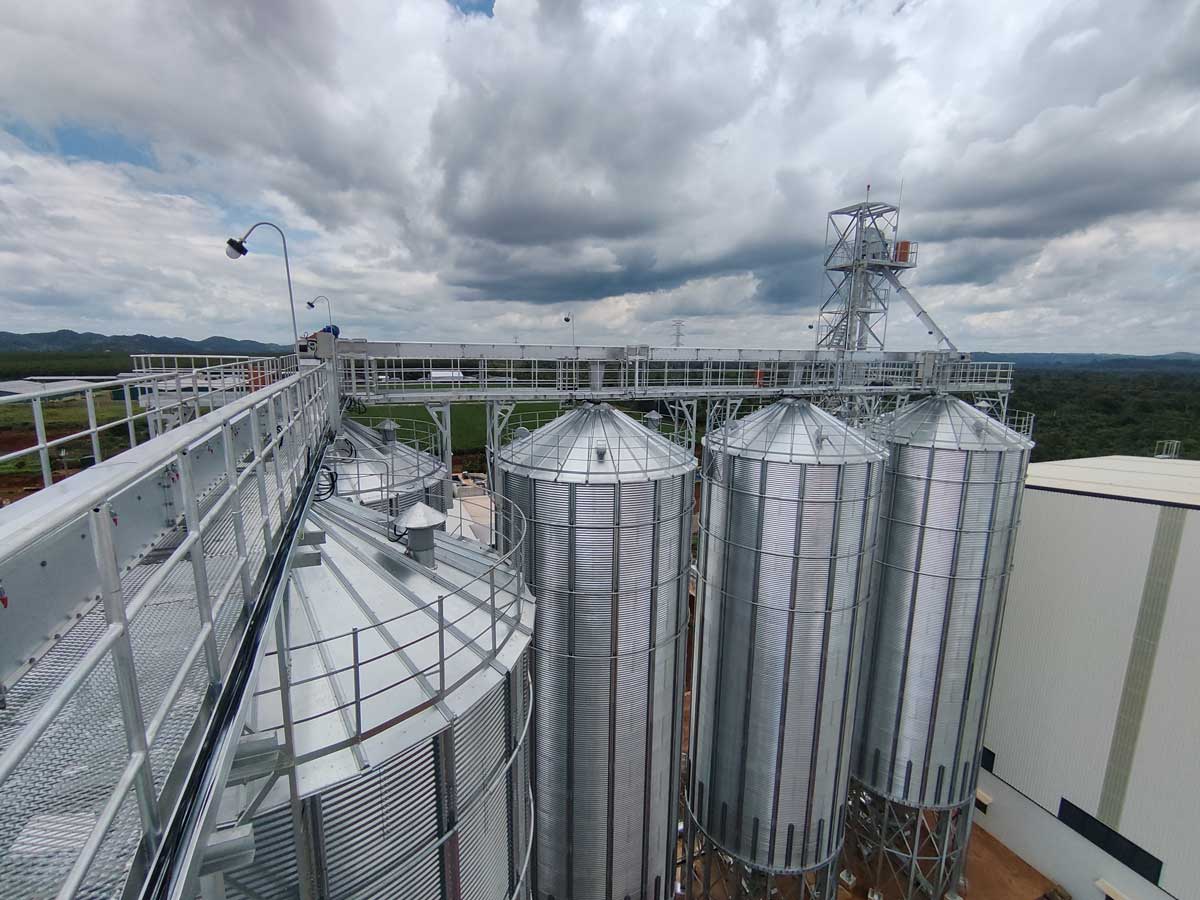
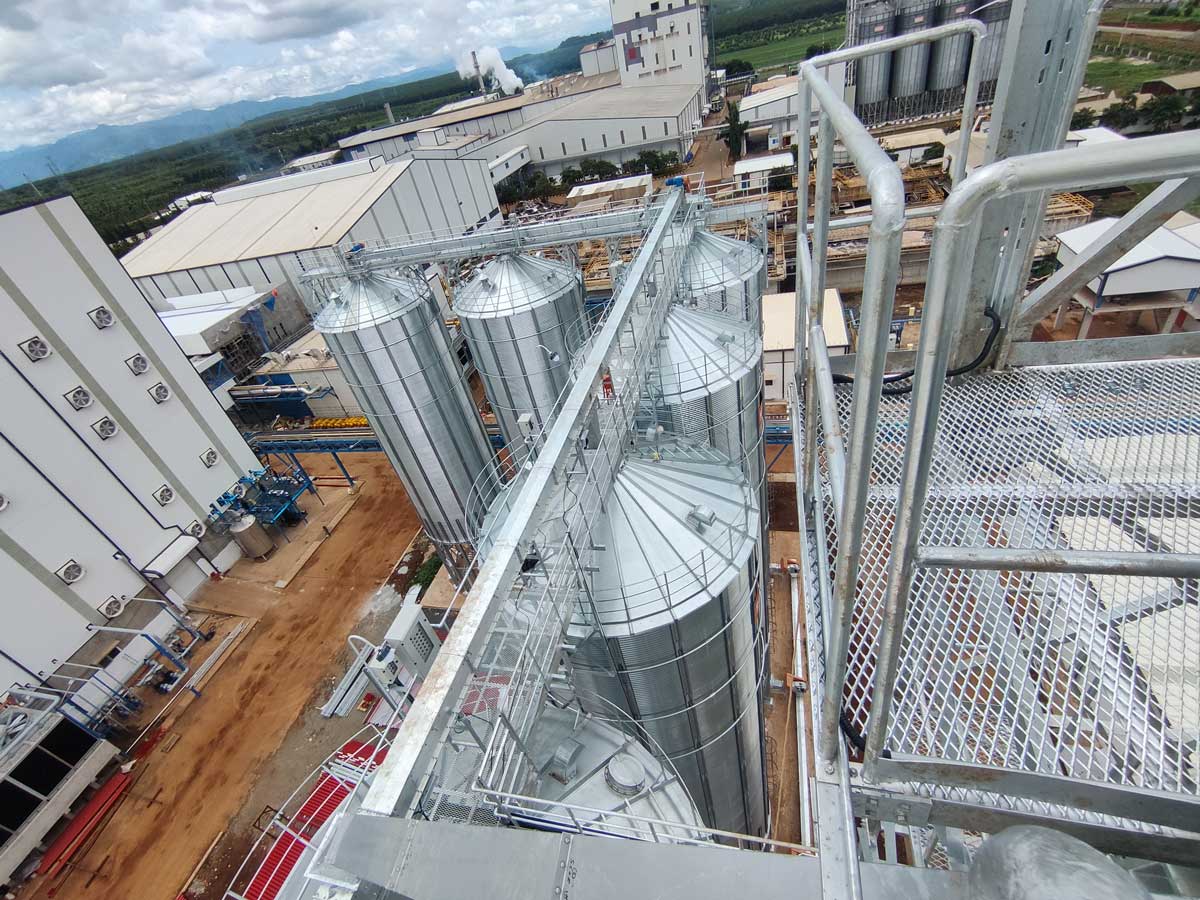
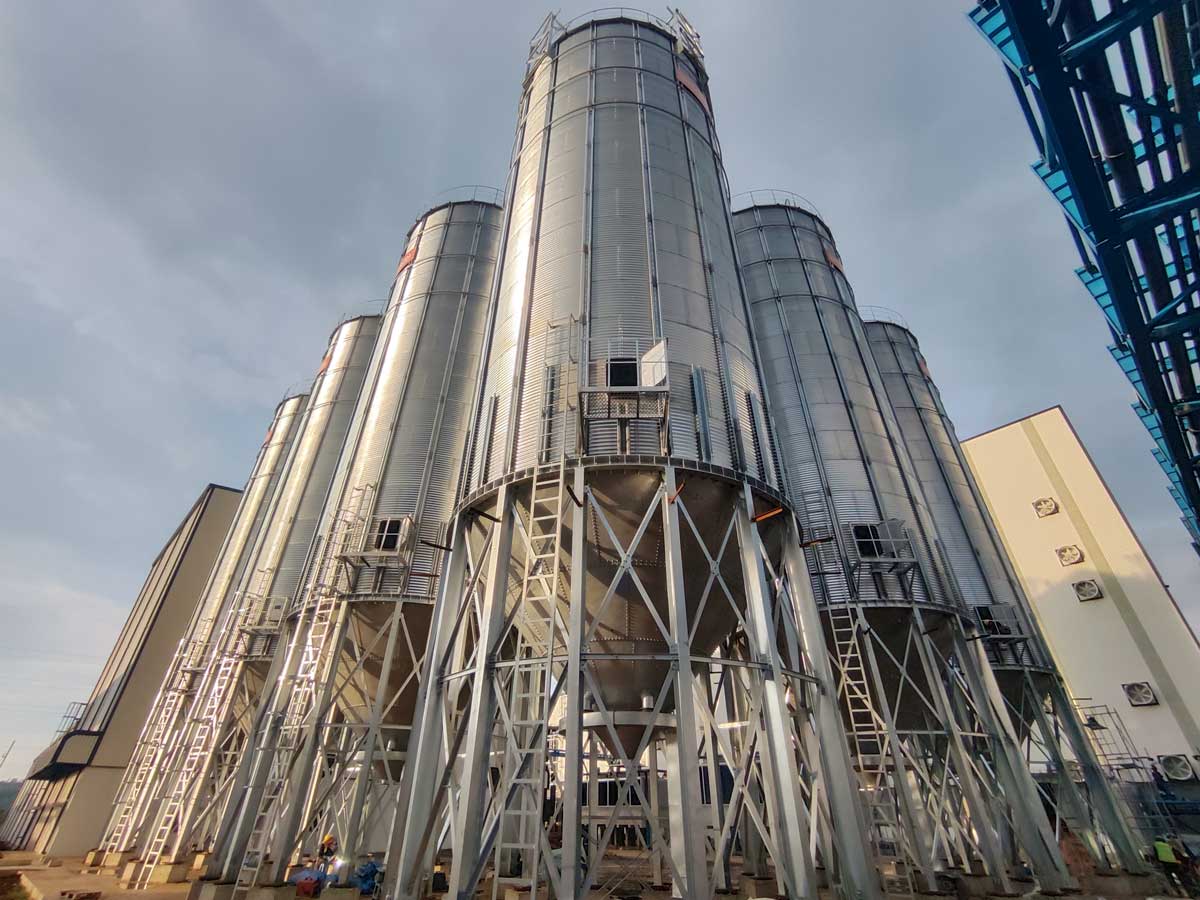
A steel silo is a cylindrical storage facility with a high-strength galvanized steel plate as its main structure, specifically designed for storing granular or bulk materials. There are four main types: corrugated plate assembled steel silos, spiral-edged steel silos, sheet-assembled steel silos, and welded steel silos. Based on storage capacity and discharge requirements, they can be made into two main categories: flat-bottomed and conical-bottomed. Currently, the most commonly used coffee bean steel silo is the galvanized corrugated assembled steel silo.
Main Structural Components
Silo Structure
The silo structure is meticulously crafted from high-quality galvanized steel sheets, combining high strength and corrosion resistance to withstand various complex environments. Its scientifically designed overall structure not only ensures the stability and safety of the steel silo during long-term use but also effectively extends the equipment's service life. The smooth inner wall reduces material residue and simplifies maintenance, achieving an ideal balance between practicality and aesthetics.
Silo Roof System
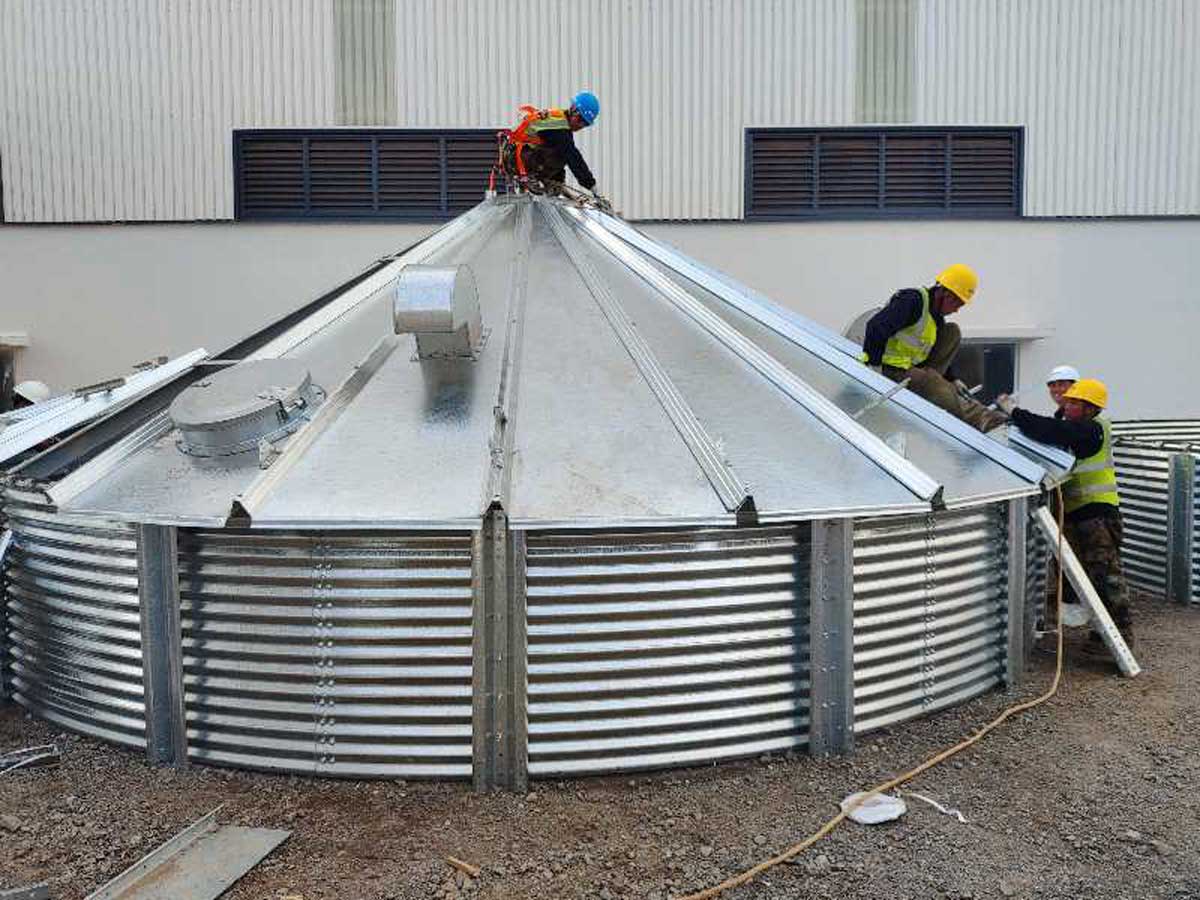
High-quality sealing strips are used at the joints of the silo wall panels for a secure and waterproof seal. Waterproof gaskets are also added to the silo wall connecting bolts, eliminating the possibility of leakage.
The silo roof panels can be made of magnesium-aluminum-zinc coated steel with a sealed interlocking structure for better corrosion resistance and sealing performance.
All silo roof openings have a flanged design and are equipped with covers for rainproof sealing.
The silo roof system employs a robust rainproof design, preventing the intrusion of external rainwater and impurities. Through optimized structure and material selection, the silo roof not only possesses excellent waterproof performance but also withstands the effects of wind and sun, consistently providing a stable and safe storage space for the materials inside the silo, allowing users to operate with confidence under various weather conditions.
Ventilation System
The silo is equipped with ventilation cages inside and a ring-shaped ventilation duct outside the conical bottom, enabling cooling and temperature equalization of the materials inside.
The silo roof features both natural and mechanical ventilation openings, effectively removing accumulated heat and preventing changes in material quality due to high temperatures.
This scientifically configured ventilation system creates a continuously flowing air environment for the steel silo, effectively preventing the accumulation of moisture and stuffiness. Through the rational layout of ventilation openings and equipment, air circulates evenly within the silo, reducing the risk of mold and keeping the materials dry and fresh. This system not only ensures storage quality but also improves overall warehousing efficiency.
Temperature and Humidity Monitoring System
An advanced temperature and humidity monitoring system endows steel silos with "intelligent sensing" capabilities, enabling real-time monitoring of environmental changes within the silo. Once abnormal fluctuations in temperature or humidity occur, the system provides timely feedback, offering managers precise data support for rapid adjustments and interventions. This not only enhances the precision of warehouse management but also provides an extra layer of protection for material safety.
Feeding and Discharging System
The feeding and discharging system integrates high-efficiency conveying equipment and reliable unloading devices, ensuring smooth and efficient material flow. Its design fully considers ease of operation and stability, reducing blockages and losses and improving overall operational efficiency. Whether loading or unloading, it achieves fast and uniform processing, saving users time and labor costs, showcasing the high efficiency and intelligence of modern steel silo systems.
In actual operation, coffee beans are conveyed into the steel silo for storage. When needed for use or sale, they can be efficiently discharged through the automatic unloading system, enabling continuous operation.
Core Advantages of Steel Silos for Coffee Bean Storage:
1. Excellent Sealing, Protecting Coffee Bean Quality
Compared to traditional warehouses, steel silos for coffee beans feature a closed structure design, effectively isolating them from external environmental influences and preventing rainwater, moisture, and contaminants from entering.
This superior sealing reduces the risk of coffee beans absorbing moisture, prevents mold growth, and minimizes air oxidation. This better preserves the original flavor and quality of the coffee beans.
2. Equipped with a Ventilation System, Improving the Storage Environment
In professional coffee bean silo design, a ventilation system is a crucial component. Steel silos can be configured with the following equipment according to coffee bean storage needs: forced ventilation systems, air circulation systems, and temperature and humidity monitoring systems. These devices effectively control airflow within the silo, maintaining a stable storage environment and preventing the quality of coffee beans from being affected by humidity or overheating.
3. Large-Capacity Storage, Improving Storage Efficiency
Steel silos are typically designed with storage capacities ranging from hundreds to thousands of tons. For coffee processing plants, export traders, or large roasting companies, large-capacity coffee bean storage systems offer significant advantages: centralized inventory management, reduced warehouse size, and improved logistics efficiency. Furthermore, steel silos, with their three-dimensional structure, require less floor space, effectively saving land resources.
4. Automated Management, Reduced Operating Costs
Modern coffee bean steel silos are typically equipped with automated conveying and control systems, such as belt conveyors, scraper conveyors, bucket elevators, bulk dispensing systems, intelligent unloading systems, and intelligent control systems. These devices enable automated coffee bean loading and unloading, as well as inventory monitoring, significantly reducing manual operations and improving management efficiency.
5. Excellent Insect and Hygiene Performance
Food-grade storage requires high hygiene standards. Traditional burlap sack storage methods easily attract insects, while steel silos offer the following advantages: a closed structure with bird-proof mesh at the air inlets and outlets, effectively preventing insects and rodents, and ease of cleaning and maintenance. Therefore, steel silos better meet food safety management requirements.
6. Robust Structure and Long Service Life
Steel silos are typically constructed from high-strength galvanized steel sheets, offering the following advantages: strong wind and earthquake resistance, excellent corrosion resistance, and a service life exceeding 20 years. This is crucial for coffee storage facilities requiring long-term stable operation.
7. Short Construction Cycle and Quick Return on Investment
Compared to traditional concrete warehouses, steel silos offer significant construction advantages: factory prefabrication, rapid on-site installation, and a short construction cycle. Typically, a medium-sized coffee bean silo project can be installed and put into operation within a few weeks, significantly shortening the investment recovery period.
As the coffee industry continues to expand, traditional warehousing methods are increasingly unable to meet the efficiency, quality, and management requirements of modern enterprises. As a highly efficient, environmentally friendly, and automated storage system, steel coffee bean silos are gradually becoming an important component of modern warehousing systems in the coffee industry.
By constructing specialized coffee bean silos, companies can not only improve coffee bean storage efficiency but also better protect coffee quality and optimize supply chain management, thereby gaining a competitive edge in the fierce market.
In the future, with the development of smart warehousing and green logistics technologies, steel coffee bean silos will play an even more important role in the global coffee industry, providing more efficient, safe, and sustainable storage solutions.
.jpg)
.jpg)

.jpg)
.jpg)
.jpg)