How to Optimize Feed Storage Management Using Steel Silos
1. Rational Design of the Storage System Layout
When constructing a steel silo system, scientific planning should be carried out in conjunction with production scale and logistics routes:
Determine the silo size based on daily consumption, set up separate management zones for raw material and finished product silos, optimize inlet and outlet routes, reduce transfer links, configure buffer silos to avoid the risk of material shortages, and a rational layout not only improves efficiency but also reduces operating costs.
2. Establish a Temperature and Humidity Monitoring System
Feed is sensitive to the environment, therefore a real-time monitoring system must be established:
Install temperature and humidity sensors inside the silo, and the system should automatically alarm for abnormal situations, linking with ventilation equipment for adjustment. Through data-driven management, a shift from "experience-based judgment" to "precise control" can be achieved.
3. Configure an Efficient Ventilation and Dehumidification System
Although steel silos have strong sealing properties, reasonable ventilation is still necessary:
Bottom ventilation systems prevent moisture accumulation, top exhaust devices release heat, and dehumidification equipment should be configured when necessary, especially in humid areas, this measure is crucial for ensuring feed quality.
4. Optimize Feed Intake and Outtake Management Processes
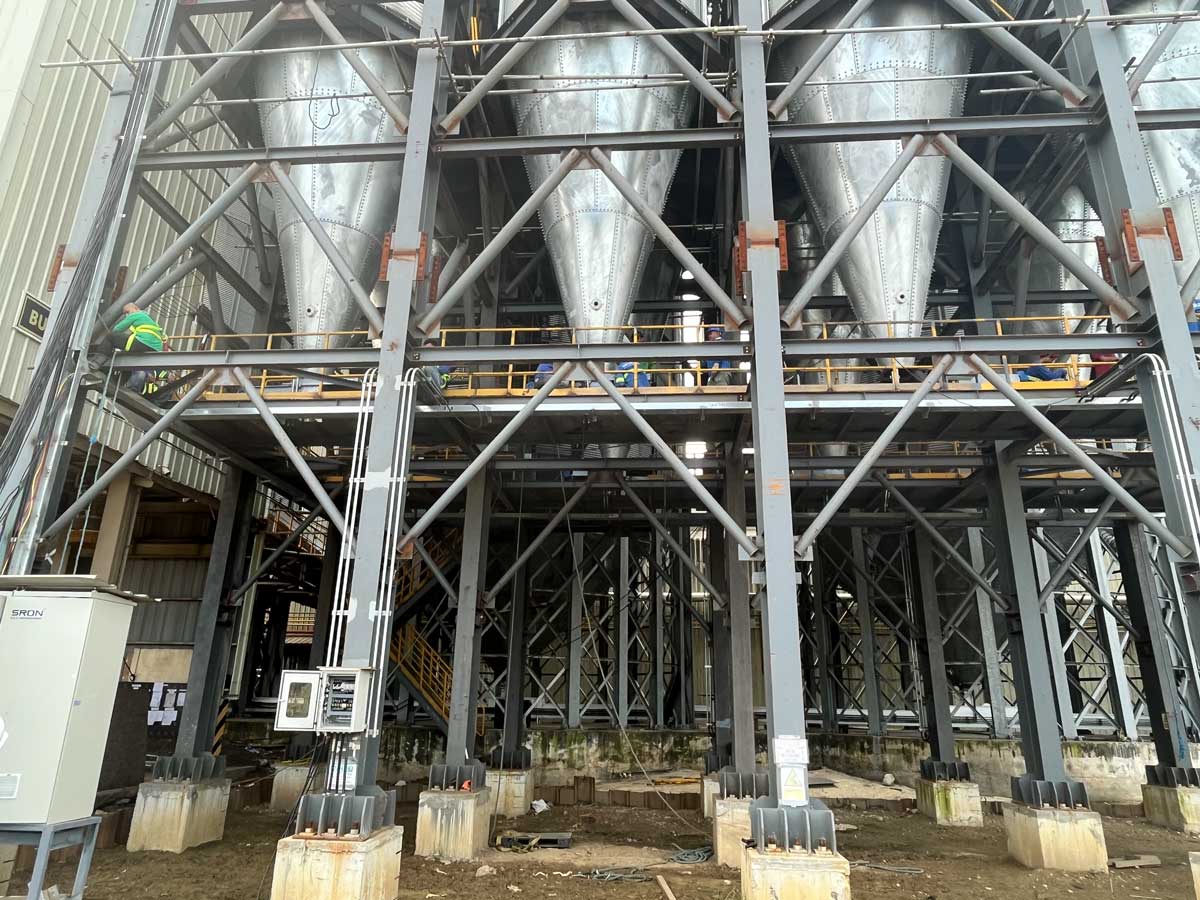
Adopt advanced conveying equipment to achieve automated operation: Use screw conveyors or bucket elevators for feeding, with a conical bottom structure to allow natural flow out and avoid residue, implementing the "First-In, First-Out (FIFO)" principle. This reduces manual intervention and ensures feed freshness.
5. Achieve Digital Inventory Management
Integrate with ERP or intelligent warehousing systems: Record inbound and outbound data in real time, automatically calculate inventory balances, analyze feed consumption trends, and use data-driven decision-making to avoid inventory backlog or shortages.
6. Strengthen Safety and Protection Measures
Feed storage also involves safety management: Install explosion-proof devices (dust environments), set up lightning protection and grounding systems, and regularly check structural stability. Safety management not only protects equipment but also ensures production continuity.
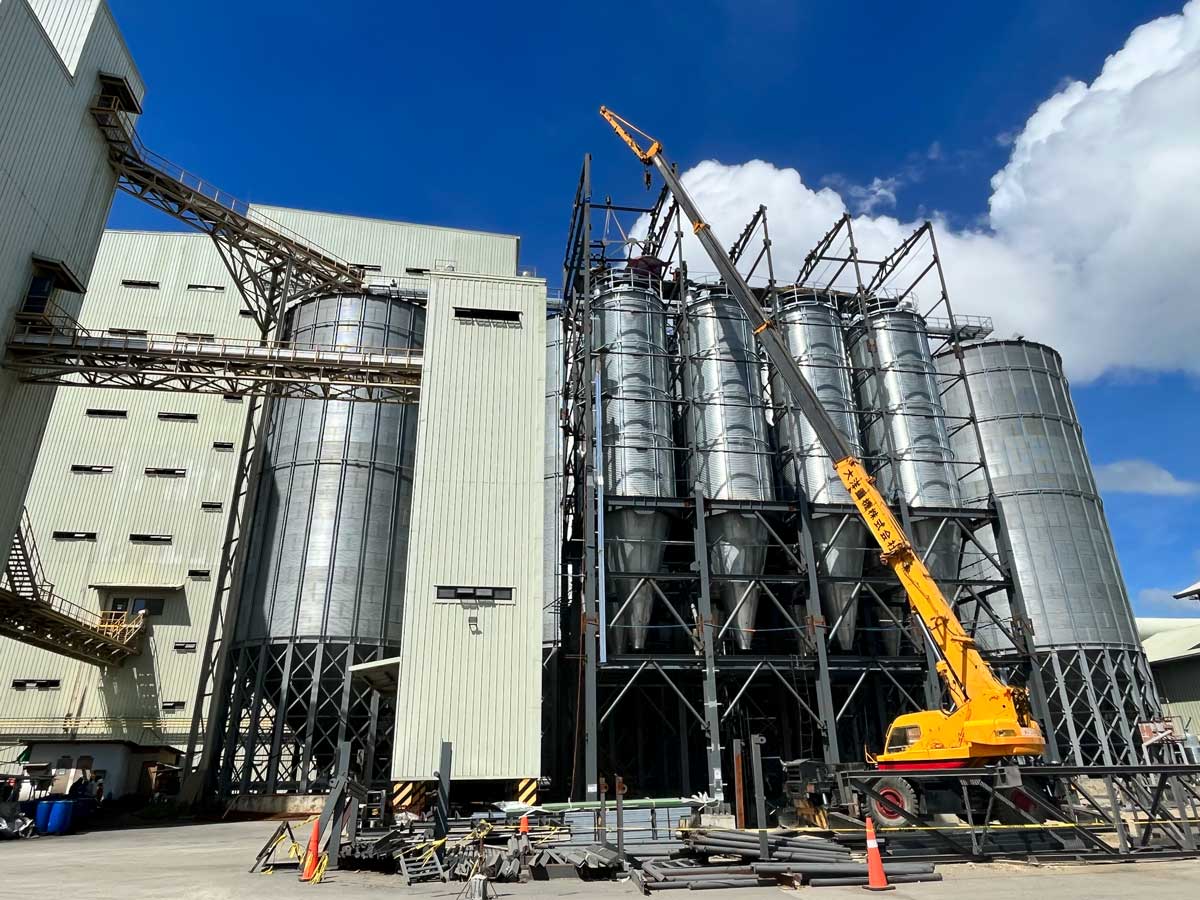
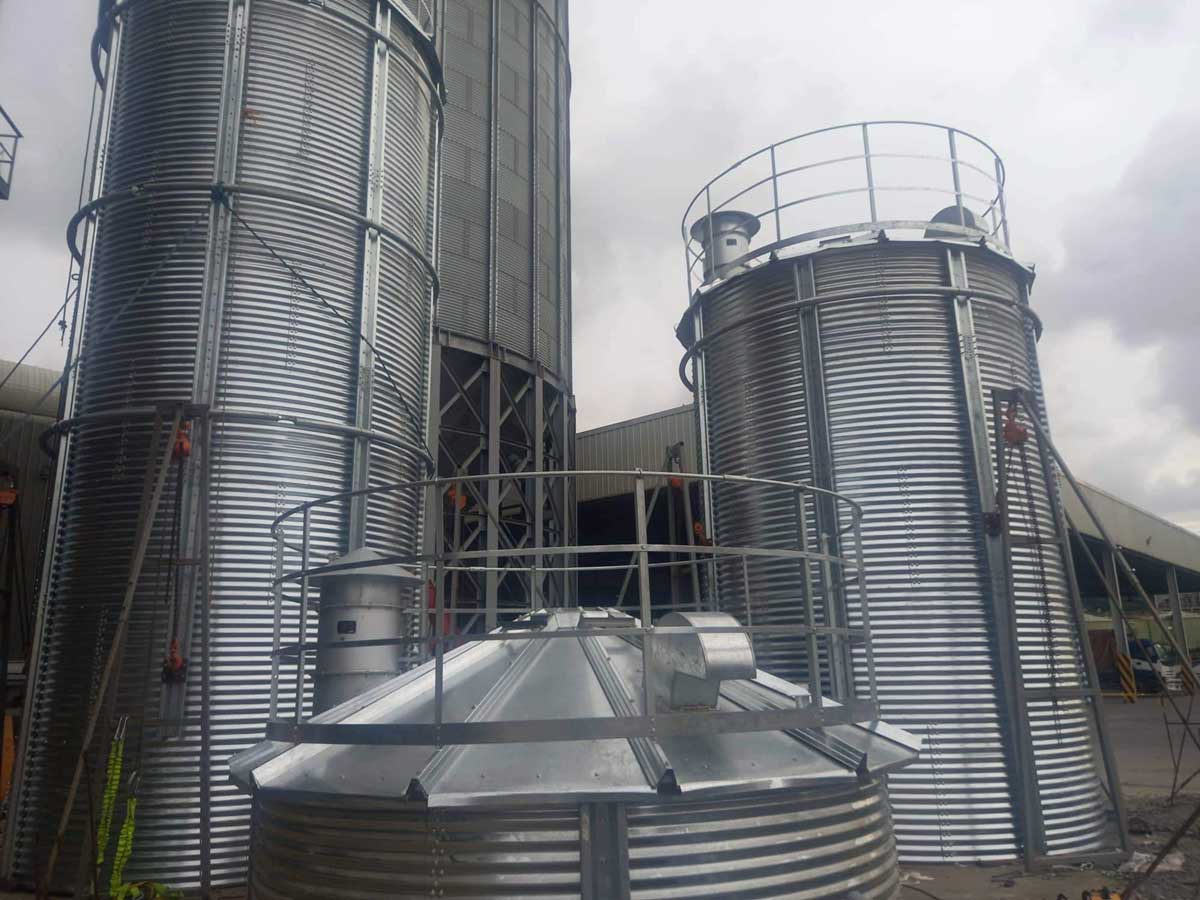
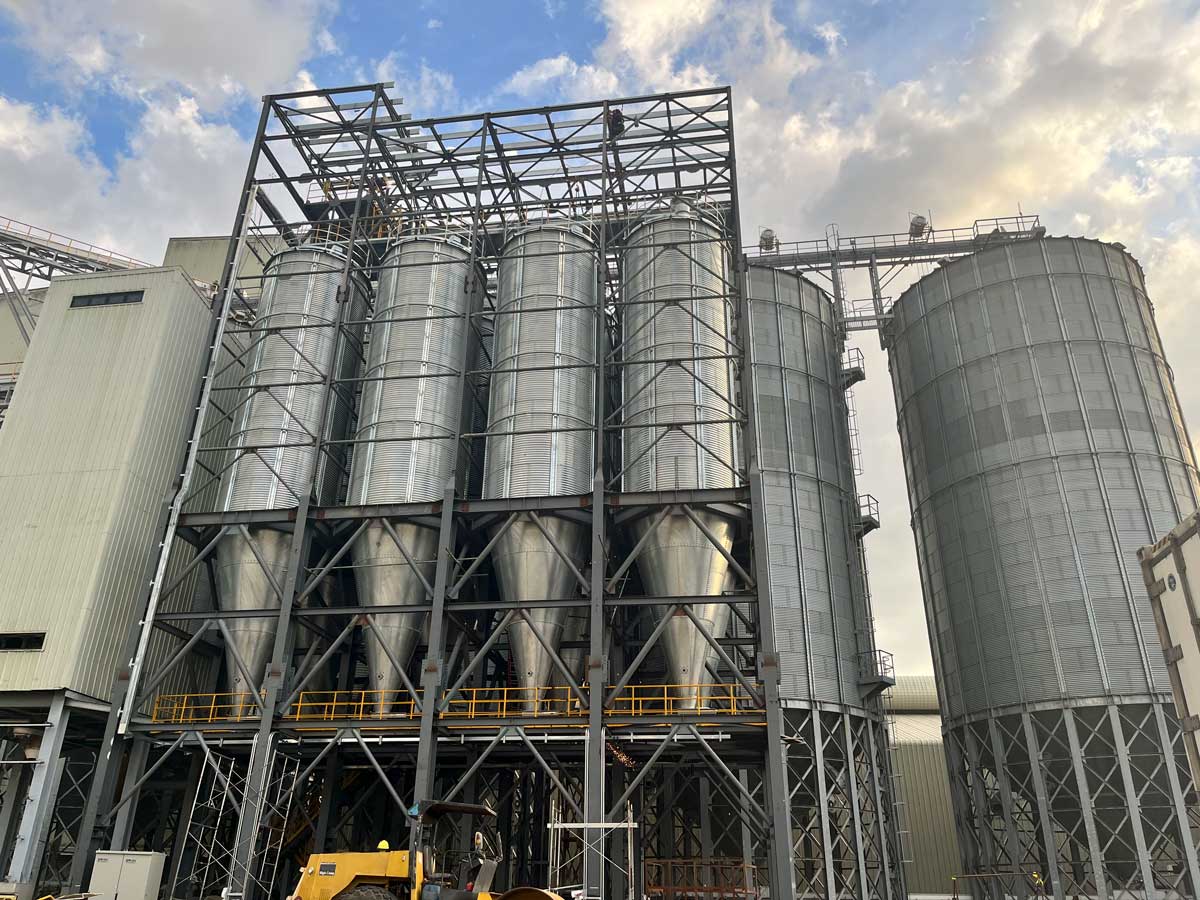
This project involved the design, manufacture, and construction of four sets of feed pellet silos, totaling 32 silos, and their associated systems, such as conveying and feeding systems, silo unloading systems, and electrical control systems.
From the initial design stage, our company fully considered factors such as the breakage rate when feed falls into the silos from a height. We added anti-breakage devices inside the silos, employing multiple buffer hoppers to reduce the free fall height per unit length, lower the impact force, and effectively protect the integrity of the feed pellets.
Furthermore, our company adopted automated construction in this project, which not only improved construction efficiency, reduced labor costs, and decreased the failure rate, but also ensured the client's sustainable production.
In modern feed management systems, traditional warehousing models are no longer sufficient to meet the demands for efficient, safe, and low-cost operations. By introducing feed steel silo systems and combining them with intelligent monitoring and automation equipment, companies can significantly improve feed storage quality and management efficiency.
Whether for feed production companies or large-scale farms, steel silos are not merely "storage tools," but crucial infrastructure driving operational upgrades. Scientific planning and rational application will bring long-term, stable economic benefits and a competitive advantage to enterprises.
.jpg)

.jpg)
.jpg)
.jpg)